Thin, bare, or damaged grass can make a commercial property feel neglected, even when the building and parking areas are well maintained. It can also lead to muddy walkways, soil erosion, weed growth, and more ongoing maintenance. For tenants, customers, employees, and visitors, the condition of the turf is part of the first impression.
When turf starts to fail, sod repair and overseeding are not interchangeable solutions. Sod repair replaces areas where grass is gone, while overseeding thickens turf that still has healthy roots. We look at the type of grass, the source of damage, irrigation coverage, drainage, shade, and foot traffic before recommending a recovery plan.
Restore Curb Appeal with the Right Turf Recovery Plan
Commercial turf can decline for many reasons. Summer heat, dry periods, compacted soil, disease pressure, vehicle traffic, and construction activity can all leave thin or bare patches behind. A small weak spot may seem minor at first, but it can quickly become a larger maintenance problem when rain carries soil away or weeds settle into open ground.
As commercial sod installation contractors, we separate turf recovery into two main paths:
- Sod repair replaces failed turf with established grass.
- Overseeding adds seed to improve density in existing grass.
- Both options work best when the underlying cause of decline is addressed.
- Irrigation, drainage, traffic, and turf type all affect the right choice.
Across the Mid-South, including Nashville, Memphis, Little Rock, Jackson, and Southaven, growing conditions can vary from one property to another. A shaded courtyard, sunny entrance lawn, and busy common area may each need a different approach, even on the same site.
Sod Repair Restores Bare Areas with Mature Turf
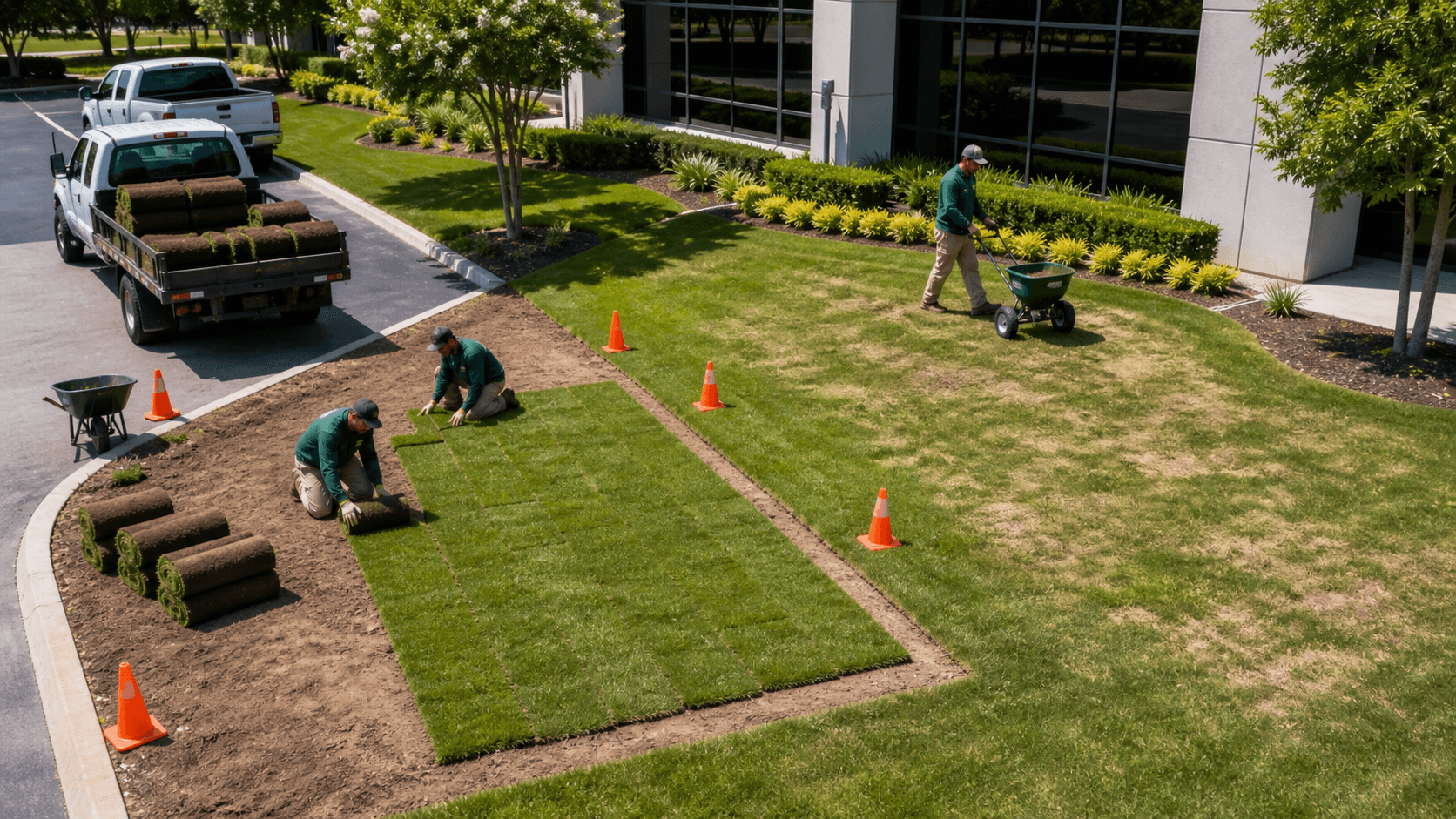
Sod repair is usually the stronger choice when grass has been lost completely or the damaged area is too large for seed to fill in reliably. We often recommend sod for severe thinning, erosion damage, pest damage, worn traffic paths, utility work, construction disturbance, and low spots where water has weakened the turf.
Before new sod goes down, the area needs more than a quick cover-up. If the soil remains compacted, water continues to pool, or irrigation misses the spot, the new turf may struggle for the same reasons the old turf failed. Our crews assess the site and prepare the ground so the repair has a better chance to take hold.
Preparation may include:
- Removing dead grass and debris
- Correcting low spots and uneven grading
- Loosening compacted soil
- Improving drainage where water collects
- Confirming irrigation reaches the repaired area
Fresh sod creates an immediate finished appearance, which is especially helpful around building entrances, monument signs, parking areas, and shared outdoor spaces. It also stabilizes exposed soil, reduces muddy conditions, and gives weeds less open ground to claim. For visible bare areas, sod can restore a clean, cared-for look much faster than waiting for seed to establish.
Overseeding Thickens Turf with Healthy Roots
Overseeding is meant to build density, not replace a lawn that has failed. When existing turf still has healthy roots but looks thin, worn, or uneven, adding seed can help fill gaps and create a fuller stand of grass. We often see this need after long summer stress, drought conditions, frequent foot traffic, or periods of disease pressure.
Successful overseeding depends on seed-to-soil contact. Seed resting on thatch or loose debris is less likely to establish than seed that can reach prepared soil. For commercial properties, our work may include mowing the turf to the proper height, clearing excess debris, aerating compacted areas, selecting suitable seed, and setting up a watering plan for germination.
Fall can be a good time for cool-season turf recovery because the air is cooler and summer stress has eased. Tall fescue, for example, may respond well to fall overseeding when it has consistent moisture and enough time to establish. Bermuda grass requires a more tailored plan. While temporary winter overseeding can provide seasonal color in some settings, it must be managed carefully so spring transition is not made harder.
Site Conditions Guide the Best Choice
The amount of surviving turf is one of the first things we examine. Broad areas with thin but living grass may be good candidates for overseeding. Concentrated bare patches, deep wear areas, or large sections with little remaining turf often call for sod repair instead.
The visible symptom is only part of the story. Grass will keep failing if the site conditions are working against it. A patch near an entrance may decline because water pools there after rain. A strip near a drive lane may stay thin because vehicles cut across it. Turf beneath trees may need a different grass choice than turf in open sun.
During a property review, we consider issues such as:
- Drainage and standing water
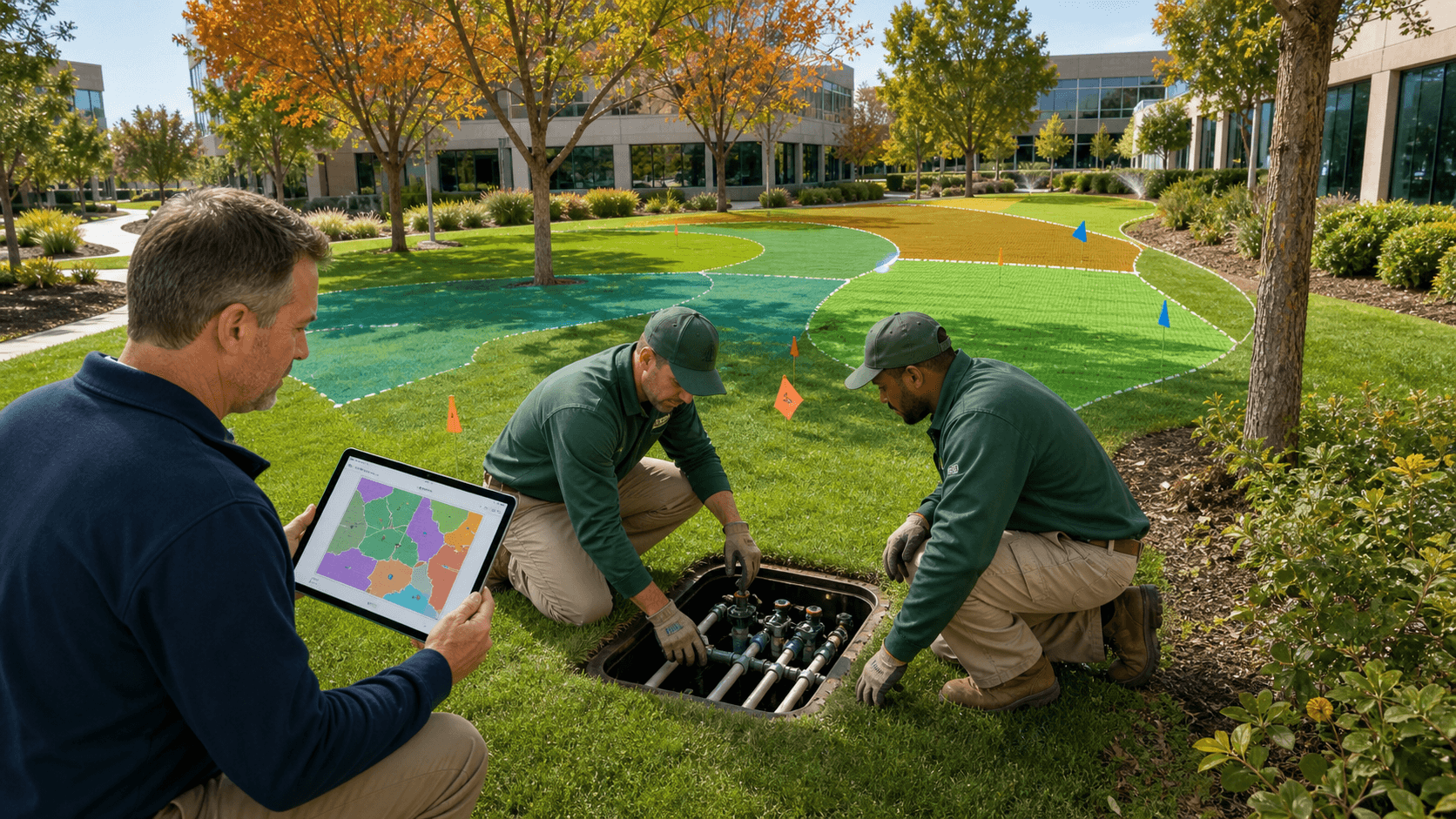
- Irrigation coverage and performance
- Soil compaction
- Shade and sun exposure
- Foot traffic and vehicle patterns
By viewing the entire property instead of treating each patch as an isolated problem, we can identify repeat trouble spots and recommend a plan that fits how the grounds are actually used. That approach helps prevent the same repair from becoming a recurring expense.
October Timing Matters for Turf Recovery
October is a useful planning window for many commercial properties with cool-season turf. Cooler temperatures can support seed establishment, provided watering remains steady and new grass receives proper monitoring. For a tall fescue lawn that has thinned over summer, fall overseeding may help build stronger coverage before winter.
Sod repair can also make sense in fall, particularly when a highly visible bare area needs attention before increased seasonal traffic, property inspections, or year-end events. Newly installed sod still needs regular watering and observation while roots establish. As colder weather slows growth, careful follow-through matters even more.
Turf type should always guide the schedule. Bermuda grass generally recovers best during its active growing period in late spring and summer. Applying the same timing or treatment to every lawn can waste effort and leave the original issue unresolved. A targeted plan is more dependable than a one-size-fits-all repair.
Address Turf Problems Before They Spread
Thin turf and bare patches rarely improve on their own when drainage, compaction, irrigation gaps, or traffic are involved. Addressing those conditions before winter weather and spring maintenance demands arrive can limit erosion, weed pressure, and repeated repair work.
Sod repair provides fast coverage where turf has failed, while overseeding strengthens grass that still has a healthy foundation. The practical next step is to identify why the turf declined, then match the recovery method to the grass type, site conditions, and level of damage.
Restore Reliable Turf Performance
At Pugh's EarthWorks, we help property managers create durable, professional-looking landscapes with solutions tailored to their sites. Our commercial sod installation contractors can assess your property and recommend the right plan for lasting results. Contact us to discuss your commercial turf needs.