Protect New Turf with a Pre-Overseeding Irrigation Map
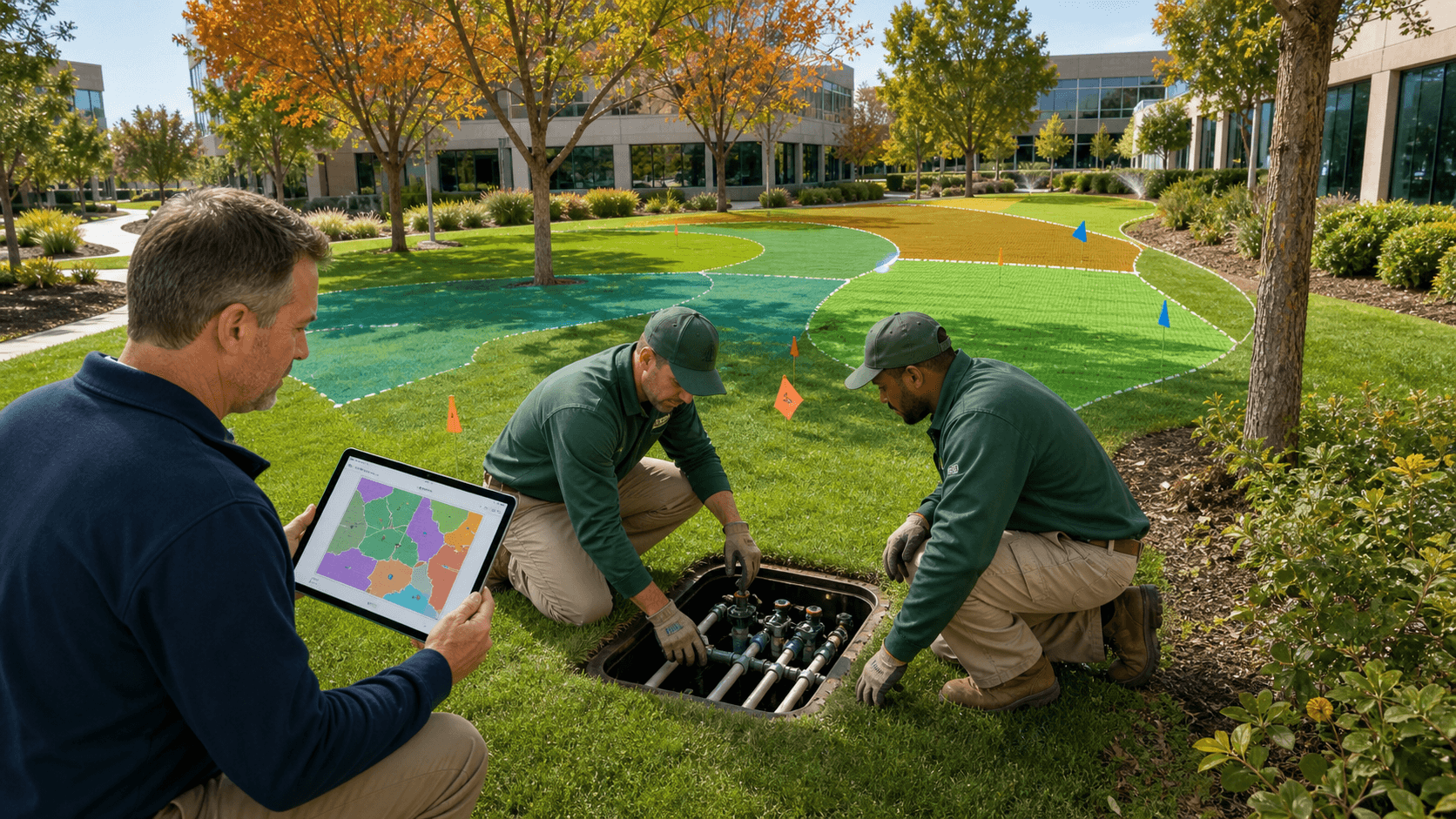
A dependable irrigation system gives fall overseeding the steady moisture it needs to get started. Before seed goes down, we recommend mapping irrigation concerns across your commercial property so repairs can be handled in the right order.
Late September often brings more favorable conditions for cool-season turf across the Mid-South, but new seed can still struggle when water coverage is uneven. A clear repair map helps us protect your investment in seed, labor, water, and ongoing grounds care.
For commercial sites in Memphis, Nashville, Little Rock, Jackson, and Southaven, an irrigation map creates one organized record for a large property. Office parks, retail centers, medical campuses, multifamily communities, and industrial grounds can all have many zones, medians, turf edges, and planting areas to review. Rather than relying on memory or scattered notes, we can document where trouble is happening and what needs attention before overseeding begins.
A useful map can flag:
- Dry zones with weak or missing sprinkler coverage
- Oversaturated areas where water stands too long
- Leaking heads, damaged valves, or pressure concerns
- Turf edges that receive little water
- Zones with inconsistent spray patterns
Even a small leak or blocked head can lead to thin turf after germination. Mapping concerns first helps us focus repairs where they will have the greatest effect on seed establishment.
Inspect Zones That Could Undermine Seed Establishment
Controller settings do not always tell the full story. We prefer to walk each irrigation zone while it is running because active testing shows where water is actually landing. A zone may appear normal on a controller screen while a clogged nozzle, low-pressure issue, or hidden leak is creating poor results in the field.
Sprinkler heads deserve close attention before seed is applied. Shrubs, mulch, signage, parked vehicles, and seasonal growth can block spray patterns. Heads may also shift out of alignment over time, sending water onto pavement instead of turf.
During an inspection, we look for issues such as:
- Clogged, broken, sunken, or poorly aimed sprinkler heads
- Low pressure, misting, or uneven head-to-head coverage
- Damaged valves, drip lines, lateral lines, or wiring
- Backflow devices, rain sensors, and controllers that need review
- Water pooling near curbs, drains, sidewalks, or paved areas
Pooling water can wash seed away, while dry turf edges may never receive enough moisture to germinate evenly. Slopes, compacted soil, high-traffic areas, and shaded zones beneath trees often need more than a simple head replacement. These areas may require irrigation adjustments that match the conditions on that part of the property.
Make Repair Maps Part of Commercial Irrigation System Maintenance
Commercial irrigation system maintenance works better when repairs are documented instead of treated as separate, one-time calls. A repair map gives us and your property team a shared view of what has been found, what has been repaired, and what may need attention later.
For each issue, we recommend recording the location, zone number, repair type, parts needed, pressure concerns, and urgency level. Photos and written notes can make the record even more useful, especially on properties with several irrigation controllers or widely spaced turf areas.
Some concerns should be handled right away, including active leaks, broken heads, damaged lines, and valves that will not open or close properly. Other items may belong on a longer-term plan, such as redesigning a zone with poor coverage or updating an outdated controller.
Keeping these records helps us prepare for seasonal changes throughout the year. Before spring startup, summer heat, or the next fall overseeding period, the map can show where the same issues have returned. That makes it easier to avoid duplicate work, plan approvals, and build a sensible repair budget around real site conditions.
Complete Repairs Before the Overseeding Window Closes
Fall overseeding has a limited window, so irrigation inspections should begin before seed and soil preparation are scheduled. Waiting until the day before crews arrive can create delays if a property needs replacement parts, line repairs, valve work, or controller updates.
Major repairs should be completed before soil is prepared and seed is spread. Once new seed is down, digging into a damaged line or correcting a valve problem can disturb the work that has already been completed.
After repairs, we coordinate watering schedules around the needs of germinating seed. Early on, new turf generally needs frequent, light watering so the seedbed does not dry out. As roots begin to develop, schedules can be adjusted gradually to support deeper establishment without keeping the soil overly wet.
No single schedule works for every commercial site. Sun exposure, soil type, drainage, slope, shaded areas, local rainfall, and changing fall temperatures all affect how much water a zone needs. Our team reviews those conditions before setting a plan, rather than applying the same timing across every part of the property.
Verify Coverage Before Overseeding Begins
A repair is not truly finished until the zone is tested again. Before overseeding crews begin, we run each repaired area and observe pressure, spray patterns, overlap, runoff, and coverage along medians, islands, slopes, and turf edges.
Simple visual checks and catch cups can reveal uneven application rates that are easy to miss at first glance. If one section is receiving far less water than the surrounding turf, it can become thin and patchy after germination. If another section receives too much, seed may shift, fungal pressure can increase, and the area may stay soft or muddy.
Final testing should also confirm that controllers are set for current fall conditions. Rain sensors, smart controls, and manual overrides should respond as intended so the system can adapt when weather changes.
A mapped inspection, timely repairs, and one last coverage check give new seed a better chance to establish evenly. By addressing irrigation concerns before overseeding, you can reduce water waste, protect fresh turf, and support a cleaner, more consistent appearance across your property.
Support Healthier Turf Establishment This Fall
At Pugh's EarthWorks, we help commercial properties prepare for seasonal turf improvements with dependable commercial irrigation system maintenance. Our team can assess system performance and coordinate repairs that align with your overseeding schedule. Contact us to discuss your property's irrigation needs and next steps.