How Memphis Commercial Landscapers Prepare Sites for Fall
Fall is a working season for commercial properties in Memphis. Lingering heat, sudden rain, falling leaves, and heavy daily traffic can wear down turf, planting beds, walkways, and drainage areas faster than many property managers expect.
We prepare sites for these changes with a clear plan rather than a last-minute cleanup. A thoughtful fall approach helps office parks, retail centers, multifamily communities, healthcare facilities, industrial properties, and other busy sites stay safe, tidy, and ready for cooler weather.
Give Your Property a Strong Start to Fall
A strong fall plan looks at the whole property. Turf recovery, bed cleanup, leaf removal, irrigation adjustments, drainage care, and winter planning all work together. If one area is overlooked, it can affect the rest of the site. For example, leaves near a drain can create standing water, while stressed turf near an entrance can quickly hurt curb appeal.
As a commercial landscaper in Memphis, we know that each property has different traffic patterns and appearance needs. High-visibility entrances may need faster attention than back-of-building areas, while loading zones and parking areas may need extra focus on debris and drainage.
Start with a Complete Site Assessment
Before we set a fall service schedule, we walk the property and look beyond individual mowing or cleanup needs. Summer heat, dry periods, storms, pests, foot traffic, and regular mowing can leave problems behind that remain visible well into fall.
During a site assessment, we look for concerns such as:
- Thin turf, bare spots, compacted soil, and weak edges
- Damaged shrubs, faded plant material, weeds, and debris in beds
- Low limbs, overgrown entrances, and blocked signs
- Standing water, erosion, clogged drains, and pavement debris
- Slippery organic material near sidewalks, curbs, and parking areas
Safety and appearance often overlap. An overgrown shrub can hide a sign. Wet leaves can make a walkway slick. A drainage problem near a parking space can leave puddles where customers, tenants, employees, and delivery drivers walk every day.
Once we understand the site, we can build a maintenance plan around weather conditions, traffic flow, and seasonal deadlines. That may include changing mowing practices, pruning, overseeding, sod work, bed cleanups, irrigation updates, and recurring leaf service. A documented plan also helps you organize priorities and set clear expectations for the season.
Restore Turf Before Cooler Weather Arrives
Early fall gives us a useful window to address summer-stressed lawns. Weak turf may be dealing with compacted soil, bare ground, insect activity, disease pressure, heavy use, or uneven watering. Leaving those issues alone can make the property look worn down as the season changes.
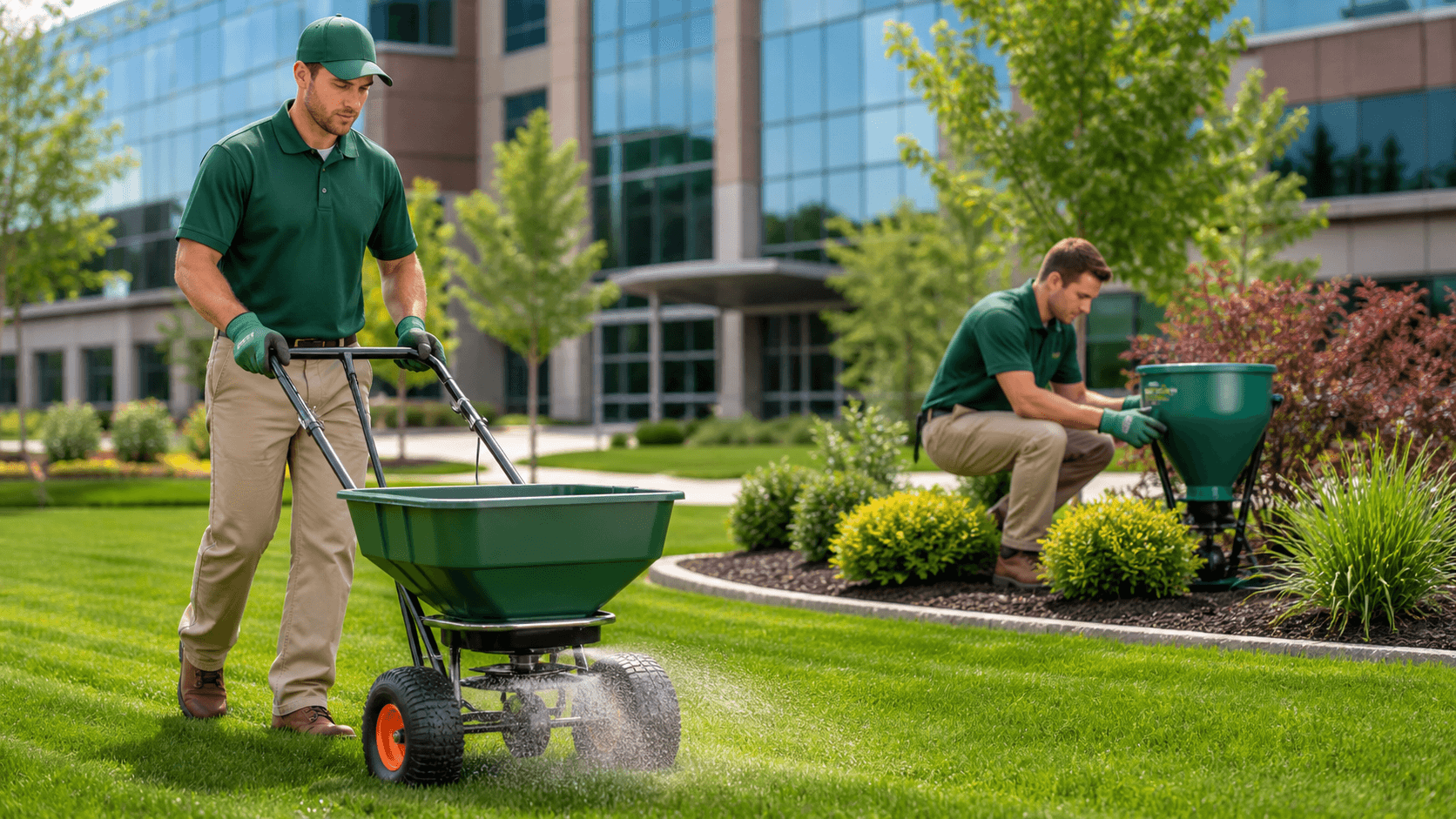
The right treatment depends on the grass type, soil condition, irrigation coverage, and the look you want for the property. Our crews may recommend aeration, overseeding where appropriate, fertilization, targeted weed control, or sod installation.
Sod can be especially helpful in highly visible spaces, including entryways, leasing centers, medians, and common areas. It can also help cover exposed soil in spots where runoff is a concern. Still, successful sod installation starts well before the material is placed. Soil preparation, grading, watering, and follow-up care all affect how evenly the sod roots and grows.
Mowing and watering should shift with the weather, too. Cutting turf too short may add stress, while watering on a fixed schedule can waste water or create conditions that encourage disease. We monitor real site conditions and adjust care as fall temperatures and rainfall patterns change.
Refresh Beds and Stay Ahead of Leaves
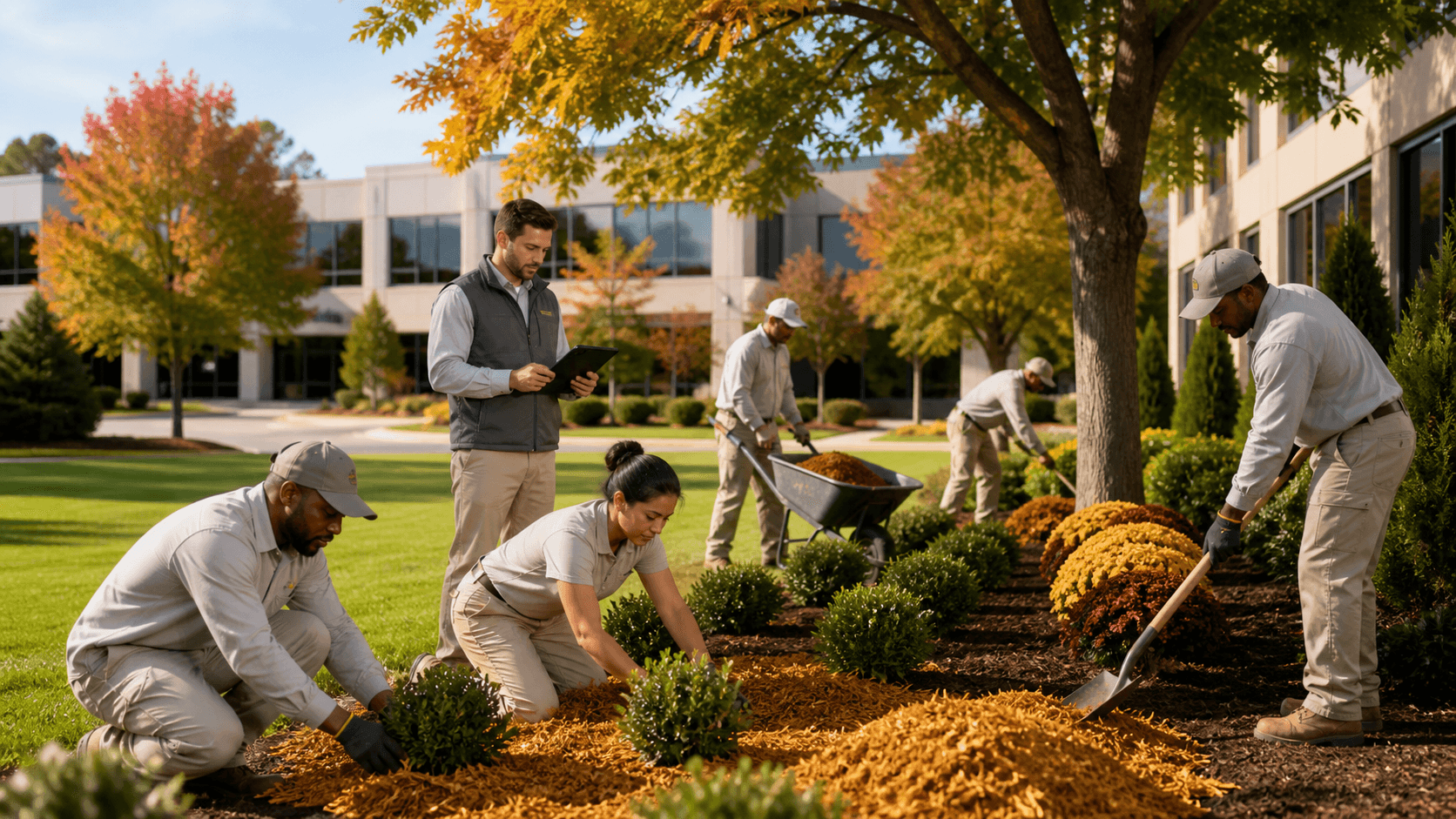
Planting beds often show summer wear before the rest of the property does. Spent annuals, damaged foliage, weeds, and loose debris can make an otherwise cared-for site feel untidy. Removing that material creates a clean base for seasonal color, mulch, and healthier plant growth.
We also remove plant material that shows pest damage or disease concerns. Leaving affected debris in place can create trouble later, especially when it collects around healthy plants.
A fall bed refresh may include:
- Removing faded annuals and unwanted growth
- Adding seasonal flowers or ornamental grasses suited to site conditions
- Installing fresh mulch at an appropriate depth
- Keeping mulch away from trunks and plant stems
- Cleaning bed edges around entrances, signs, and common areas
Leaf cleanup needs more than one visit. Leaves can pile up around curbs, storm drains, sidewalks, entrances, and bed lines throughout the season. Once they become wet, they can block drainage, smother turf, create slippery surfaces, and make a property appear neglected. Recurring cleanup helps us keep ahead of the drop instead of waiting until every tree is bare.
Prepare Water Systems and Hardscapes for Winter
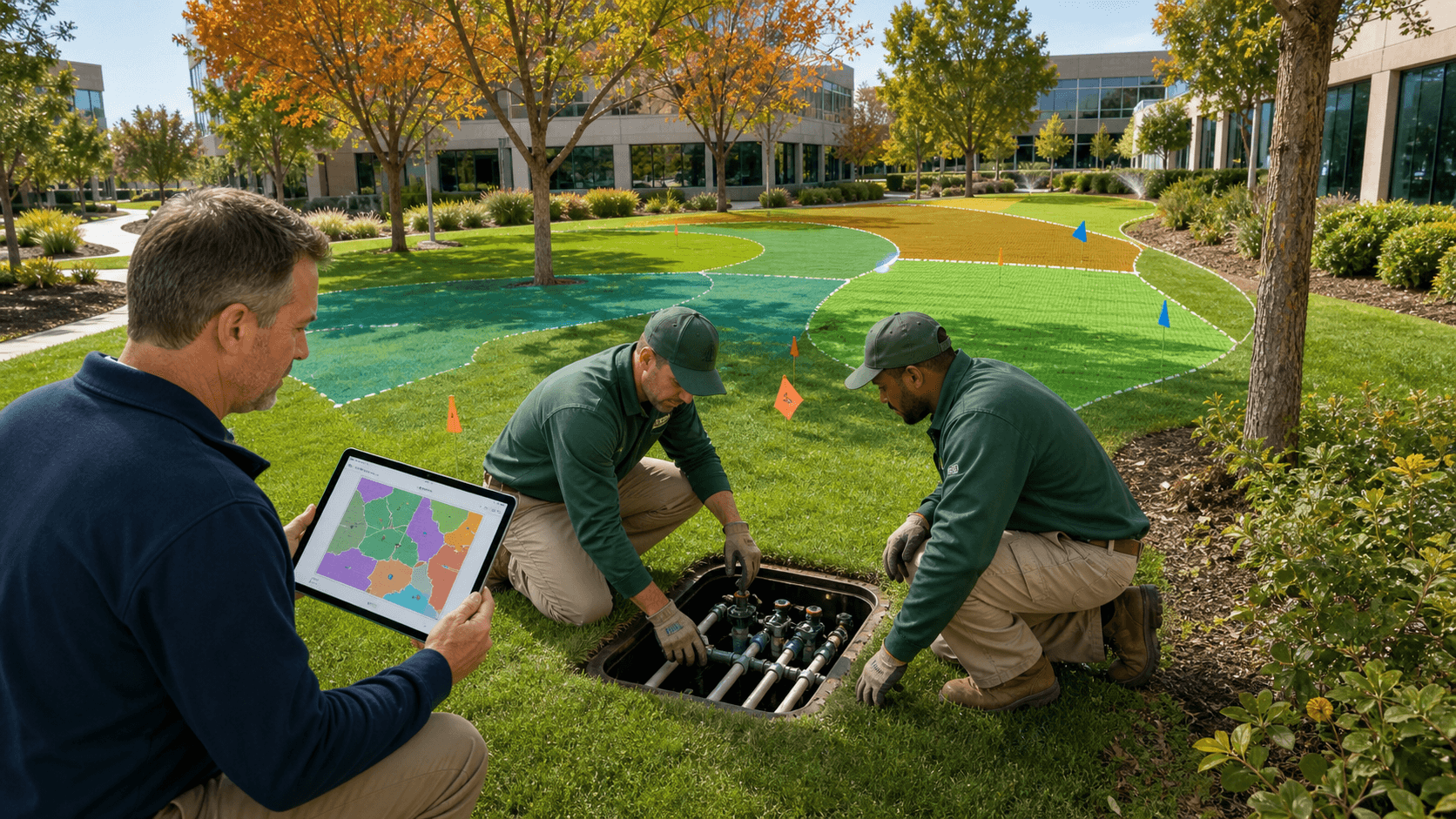
Fall is also the right time to inspect irrigation systems before freezing weather becomes a risk. We check irrigation zones, heads, valves, controllers, leaks, and coverage issues. As temperatures cool and rain becomes more common, watering schedules often need to be reduced.
Planning an orderly seasonal shutdown helps protect irrigation components from cold-weather damage. Taking care of those details before a freeze is far easier than dealing with broken pipes, valves, or other equipment after the fact.
Hardscapes deserve the same attention. We clear leaves, sediment, and debris from drainage paths near parking lots, walkways, loading areas, curbs, and building entrances. We also watch for erosion, debris buildup, and uneven areas that may become hazardous in wet weather.
Winter weather may be occasional in Memphis, but preparation still matters. We help identify priority access points, treatment zones, communication steps, and areas that may need snow and ice treatment if conditions develop. Having that plan in place supports safer access and fewer surprises during an urgent forecast.
Plan a Fall Site Review
A fall walkthrough with our team can bring hidden issues into view before they grow into larger disruptions. It gives us a chance to review turf recovery, bed improvements, leaf management, drainage, irrigation adjustments, and winter readiness as one connected plan.
The best takeaway is simple: fall preparation protects both the appearance and function of your property. Addressing small concerns early helps keep grounds safer, cleaner, and better prepared for the season ahead.
Keep Your Commercial Property Ready for Fall
At Pugh's EarthWorks, we provide seasonal landscape support tailored to your property's needs. Partner with a commercial landscaper in Memphis to coordinate dependable fall services and maintain polished grounds. Contact us to discuss your commercial landscaping priorities.