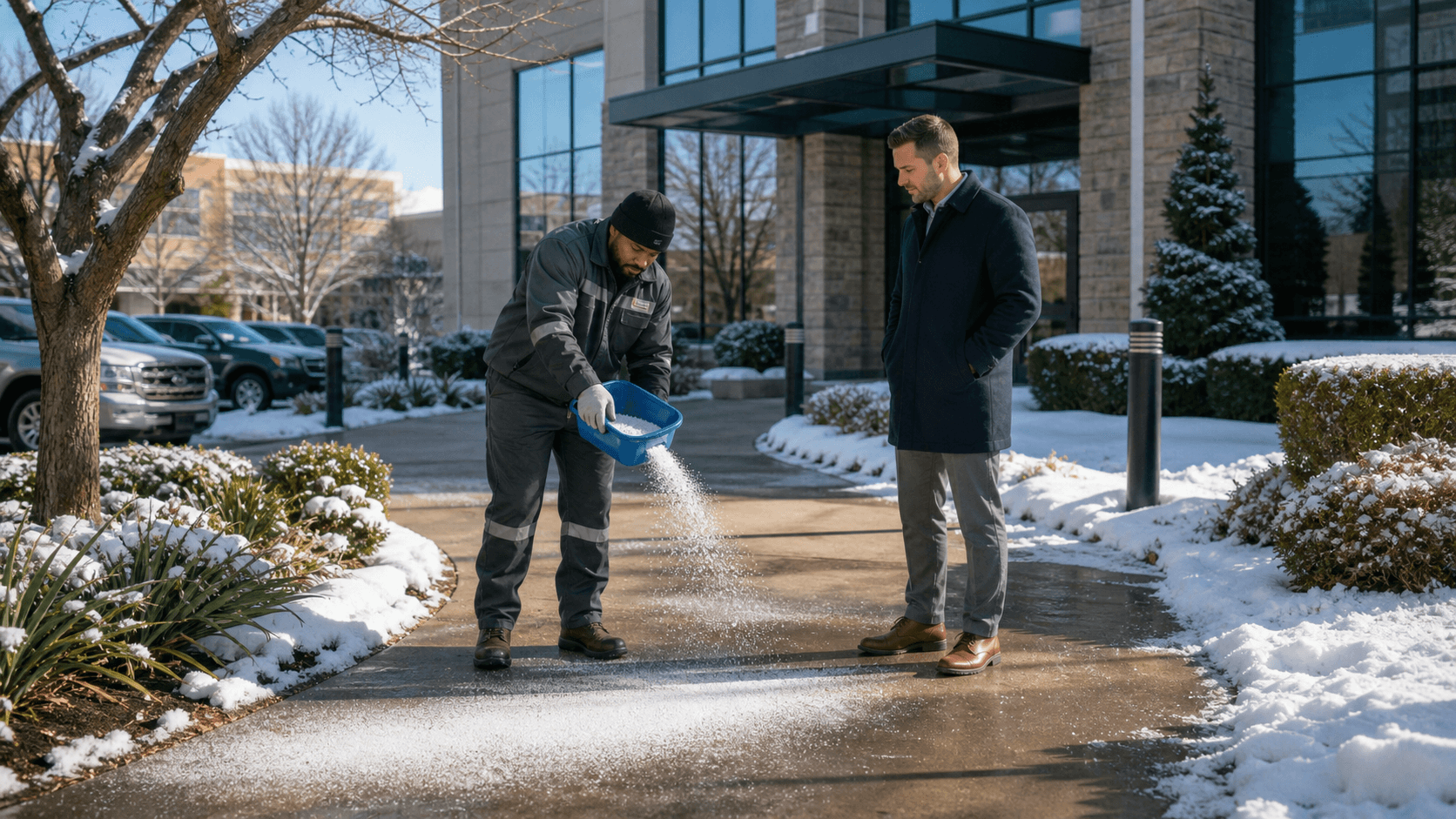
Winter weather can expose small grounds issues that were easy to miss during warmer months. By mid-October, changing temperatures, heavy rain, frost, and occasional snow or ice can affect walkways, turf, drainage areas, and entry points. A thoughtful winter plan helps you protect people, keep operations moving, and care for the grounds your tenants, visitors, and employees see every day.
At Pugh's EarthWorks, we provide commercial grounds maintenance, sod installation, irrigation-related care, and snow and ice treatment across the Mid-South, including Nashville, Memphis, Little Rock, Jackson, and Southaven. Our facility grounds care services are built around the conditions commercial properties face as fall gives way to winter.
Assess Property Risks Before Winter Weather Arrives
A winter-ready property starts with a careful walkthrough. Before weather becomes less predictable, we recommend identifying the places where rain, frost, standing water, and foot traffic could create trouble. High-use areas deserve special attention because they can quickly become slippery, muddy, worn down, or hard to access.
During a site review, we look closely at areas such as:
- Main entrances, sidewalks, ramps, and stairs
- Parking lot islands, drive lanes, and loading areas
- Low-lying turf sections and visible drainage paths
- Bare soil, damaged sod, and compacted ground
- Planting beds near buildings, curbs, and walkways
Weak turf and exposed soil can become bigger problems during winter. Rain can wash away loose soil, repeated traffic can turn thin turf into mud, and poor drainage can leave water sitting where it does not belong. Declining plant material may also become more noticeable once surrounding growth slows down.
We encourage property managers to document priority areas before the first cold snap. A clear service plan makes it easier for us to coordinate maintenance, irrigation-related care, and snow or ice response around the areas that matter most to your daily operations.
Protect Turf, Plants, and Soil Before Dormancy
Late-fall maintenance gives commercial grounds a cleaner, healthier starting point for winter. Mowing at the proper time, removing leaves, cleaning up debris, and maintaining defined edges all support a polished appearance. Just as important, removing heavy leaf cover can help prevent turf from being smothered and keep debris from collecting around drains.
Turf that struggled through summer heat, heavy use, erosion, or storms may need attention before winter arrives. Bare areas near entrances, common spaces, and tenant-facing areas can turn into muddy spots when rain becomes frequent. Sod support can help address worn sections and reduce the chance that exposed ground becomes an eyesore or a maintenance concern.
Planting beds also benefit from seasonal care. We may review mulch coverage, damaged plant material, exposed soil, and areas where runoff has disturbed the ground. Pruning may be appropriate in some situations, while other plants are better left alone until the right time. The goal is to protect plant material and keep the property looking cared for during the dormant season.
Prepare Irrigation and Drainage for Cold Conditions
Irrigation-related care remains important even when temperatures cool down. Mid-South winters can bring intermittent freezes, and exposed irrigation parts may be affected if a system has not been reviewed. Valves, backflow devices, lines, and irrigation zones all deserve attention before colder weather settles in.
Our facility grounds care services can include reviewing signs of leaks, overspray, uneven coverage, and poor drainage. Excess water near sidewalks, entrances, parking areas, or curbs can become a slip concern when temperatures fall. In turf and planting beds, poor drainage may lead to erosion, standing water, and stress on plant material.
Seasonal irrigation adjustments should match rainfall and changing weather. Reducing unnecessary watering can help avoid overly wet ground while still supporting turf and plants as they prepare for dormancy. A professional review also helps us spot drainage concerns early, when there is more time to plan a response.
Plan Snow and Ice Response Before the First Storm
Snow and ice planning works best when it is done before freezing precipitation appears in the forecast. Once a storm is approaching, facility teams are often focused on immediate decisions. Having priorities already mapped out can make winter weather response more organized and less stressful.
A site-specific snow and ice plan should identify the areas that need the fastest attention, including:
- Public entrances and primary sidewalks
- Parking lots, drive lanes, and accessible routes
- Loading zones and service entrances
- Ramps, stairs, and high-traffic paths
- Areas where water tends to freeze first
Communication is another important part of the plan. You should know which areas are most important for employee, customer, tenant, and vendor access, as well as how weather-related service updates will be handled. Clear expectations allow us to focus on the right areas when conditions change quickly.
Snow and ice treatment is not just about clearing visible accumulation. It is about helping people move through the property with greater confidence and helping reduce disruptions when winter weather affects regular business activity.
Build Your Winter Grounds Care Plan
Winter readiness is easier when grounds care is treated as one connected plan instead of a series of last-minute tasks. Turf support, cleanup, drainage awareness, irrigation adjustments, and snow and ice treatment all work together to protect the property through changing weather.
Early planning gives you time to prioritize safety concerns, address worn or damaged areas, and prepare for the first hard freeze or heavy rain event. With a clear plan in place, your commercial property can stay cleaner, safer, and better prepared for a strong return in spring.
Protect Your Property Through Every Season
Pugh's EarthWorks provides dependable facility grounds care services tailored to the needs of commercial properties. Our team can help maintain a professional appearance while addressing seasonal concerns across your grounds. Ready to discuss your property's needs? Contact us to get started.