A clear snow and ice route plan helps protect access to your Lebanon commercial property before winter weather arrives. Even a brief stretch of freezing rain, sleet, or snow can make entrances slippery, block parking spaces, slow deliveries, and disrupt normal operations. By late October, we recommend putting a documented response plan in place so your team is not making rushed decisions when weather conditions worsen.
At Pugh's EarthWorks, we help commercial properties across the Mid-South, including the greater Nashville area, prepare for winter conditions with site-specific planning. A strong plan accounts for your property layout, priority areas, equipment access, deicing needs, service timing, and communication procedures.
Protect Winter Access Before the First Storm
Winter weather in Lebanon does not always arrive as a major snowfall. Freezing rain, overnight ice, and repeated freeze-thaw conditions can create serious hazards just as quickly. A parking lot may look clear in the afternoon, then develop slick spots at entrances, ramps, and shaded walkways after temperatures drop.
Planning early gives us time to understand how your site operates. We can identify where employees park, where customers enter, where deliveries arrive, and which areas need attention first. That preparation helps prevent delays when roads are difficult to travel and service crews are responding to changing conditions.
A documented route plan should cover:
- Priority entrances, sidewalks, parking areas, and drive lanes
- Equipment access, gate codes, and after-hours entry procedures
- Deicing locations and material needs
- Service timing based on your operating schedule
- Who should receive weather and service updates
Map Priority Areas Before Snow Covers Them
Every commercial property has areas where snow and ice create greater risk. We start by identifying the locations that need to be cleared or treated first, rather than treating the entire site as one large space. This gives crews a clear order of work when conditions are time-sensitive.
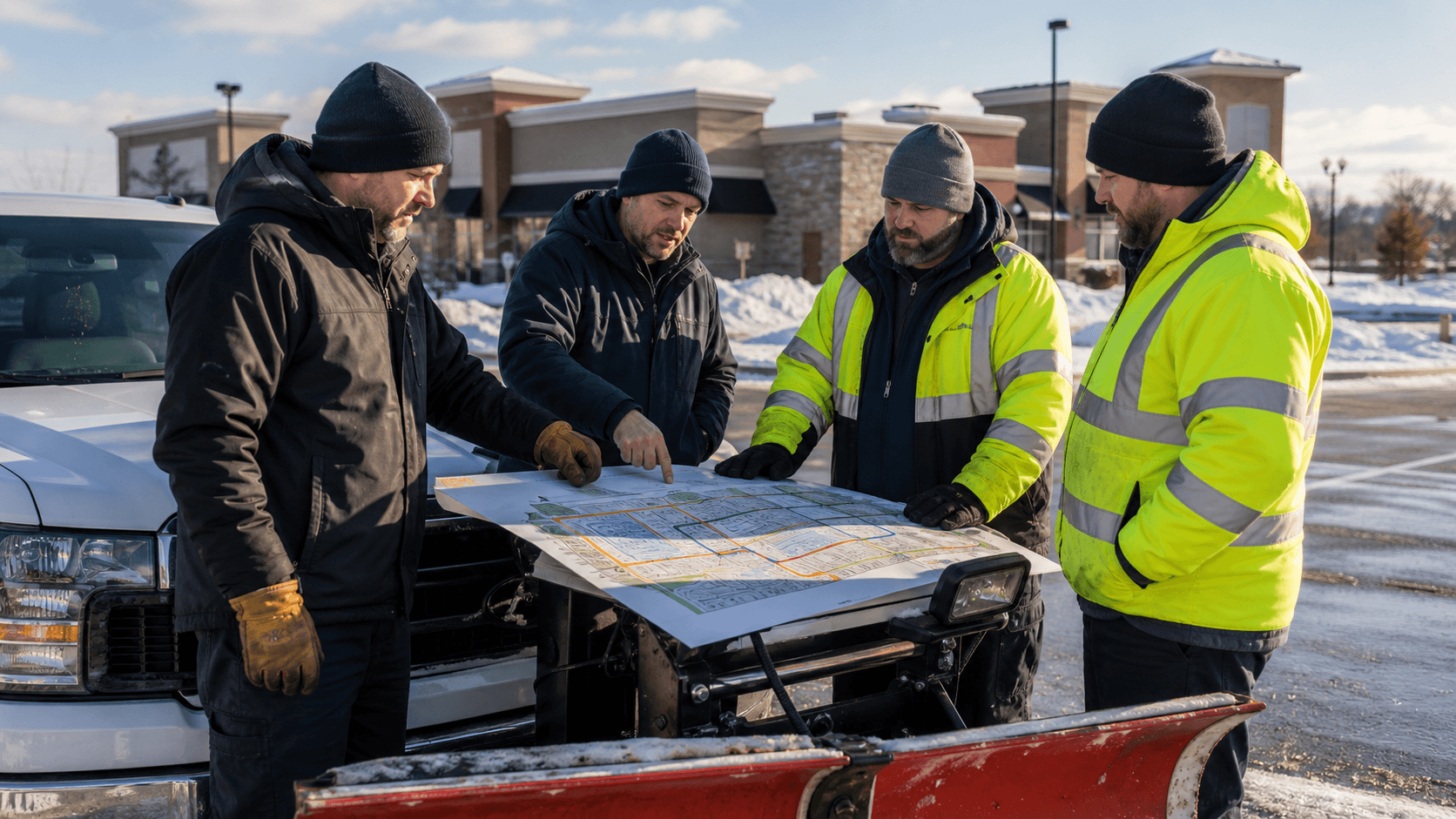
For snow removal in Lebanon, TN, a detailed property map can help our service teams respond more efficiently when local roads and commercial sites are affected. Marked site plans and current photos are especially helpful for larger retail centers, office campuses, medical facilities, warehouses, and industrial properties.
Your map should clearly show high-priority areas such as:
- Main entrances, emergency exits, and fire lanes
- Accessible parking spaces and connecting walkways
- Loading zones, delivery areas, and loading docks
- High-traffic drive lanes and parking lot entrances
- Ramps, shaded walkways, and areas near drainage structures
We also document obstacles that may be harder to see after precipitation begins. Parking islands, curbs, light poles, speed bumps, utility boxes, landscaped beds, low-clearance areas, and drainage features should all be noted before winter weather arrives. This helps reduce the chance of property damage while allowing operators to work safely and efficiently.
Whenever construction, new signage, parking changes, or site improvements affect traffic flow, your map should be updated. An old plan can create confusion during an overnight weather event.
Build Routes Around Changing Weather Conditions
No two winter events need the same response. Light snow may call for plowing and targeted deicing, while freezing rain may require early treatment of sidewalks, entrances, ramps, and driving surfaces. Sleet can pack down under vehicles, and a freeze-thaw cycle can bring icy conditions back after a site has already been serviced.
We build routes with flexibility in mind. Weather can shift overnight, during business hours, or after a site has been treated. A plan should allow crews to adjust their timing, equipment, and material applications based on actual conditions rather than a one-size-fits-all schedule.
Route order also matters. Nearby commercial properties can be grouped in a practical travel sequence, but each site's needs should guide its priority. A business that opens early, receives morning deliveries, or serves visitors around the clock may need earlier attention than a property with a later start time.
With snow removal in Lebanon, TN, we recommend confirming the following before the season starts:
- Who receives weather alerts and service updates
- Who can approve added service if conditions change
- Who can report an urgent ice hazard after hours
- When your property opens and when deliveries typically arrive
- Whether any areas must remain open during active service
Clear answers prevent delays when a weather advisory or unexpected freeze affects the area.
Coordinate Equipment, Crews, and Deicing Supplies
The right resources depend on the size and layout of your property. Smaller commercial sites may need compact equipment, hand crews, and focused deicing around entrances and walkways. Large parking lots, industrial facilities, and multi-building properties may require plows, loaders, spreaders, and multiple teams working through a planned sequence.
Before winter arrives, we review access details that can slow down a response. Gate codes, security procedures, parking restrictions, loading dock rules, and site-specific safety concerns should be shared ahead of time. Crews also need to know where equipment can enter, turn around, stage materials, and avoid restricted areas.
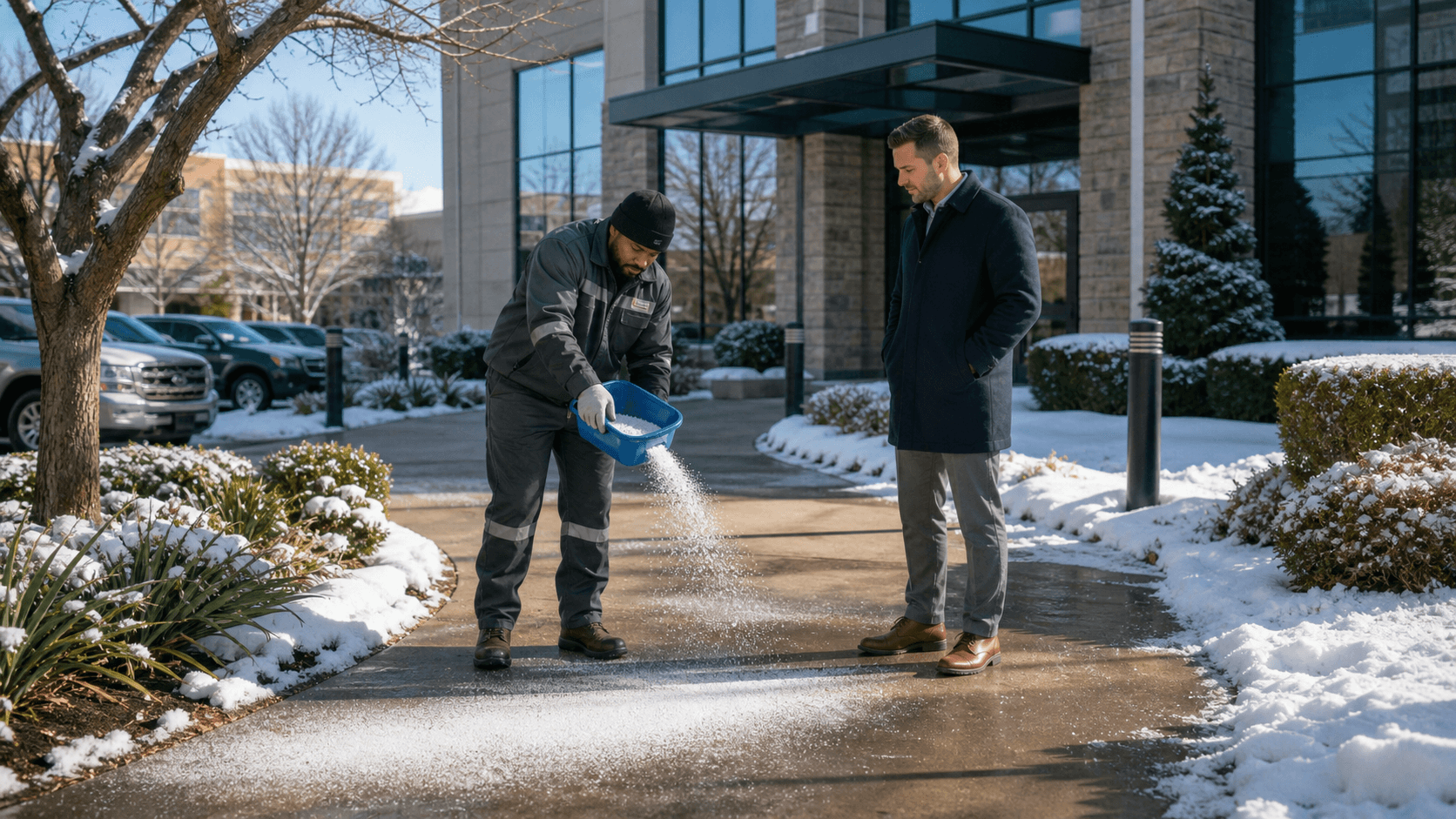
Deicing requires planning as well. Parking lots, sidewalks, ramps, entrances, and shaded areas may need different treatment timing based on surface conditions and forecast temperatures. Pre-treatment may help limit ice bonding before a storm, while follow-up applications may be needed after refreezing, continued precipitation, or heavy vehicle traffic.
Communicate Clearly During Winter Weather
Good communication keeps a winter response plan moving. Before an event, your property team should know who contacts the snow service provider, who approves extra work, and who notifies tenants, employees, security staff, or visitors about changing conditions.
Occupants and visitors may need updates about temporary parking restrictions, alternate entrances, closed walkways, delivery changes, and active snow removal equipment. These notices help people move through the property more safely while giving crews room to work.
Service records also matter. Time-stamped updates, photos, completed-service notes, and hazard reports can help your team track conditions throughout an event. If weather changes the original route or creates a new concern, quick updates help everyone make informed decisions.
A dependable winter plan is built before the first slick morning, not after it. When priorities are mapped, communication is clear, equipment is ready, and routes reflect how your property operates, you can support safer access for employees, tenants, customers, and deliveries throughout the season.
Keep Your Commercial Site Ready for Winter
Pugh's EarthWorks helps commercial properties prepare with dependable snow removal in Lebanon, TN tailored to their access points and operational needs. Our team can help you establish a service approach that supports clear entrances, parking areas, and delivery routes when conditions change. Contact us to discuss your property's winter service needs before the season begins.