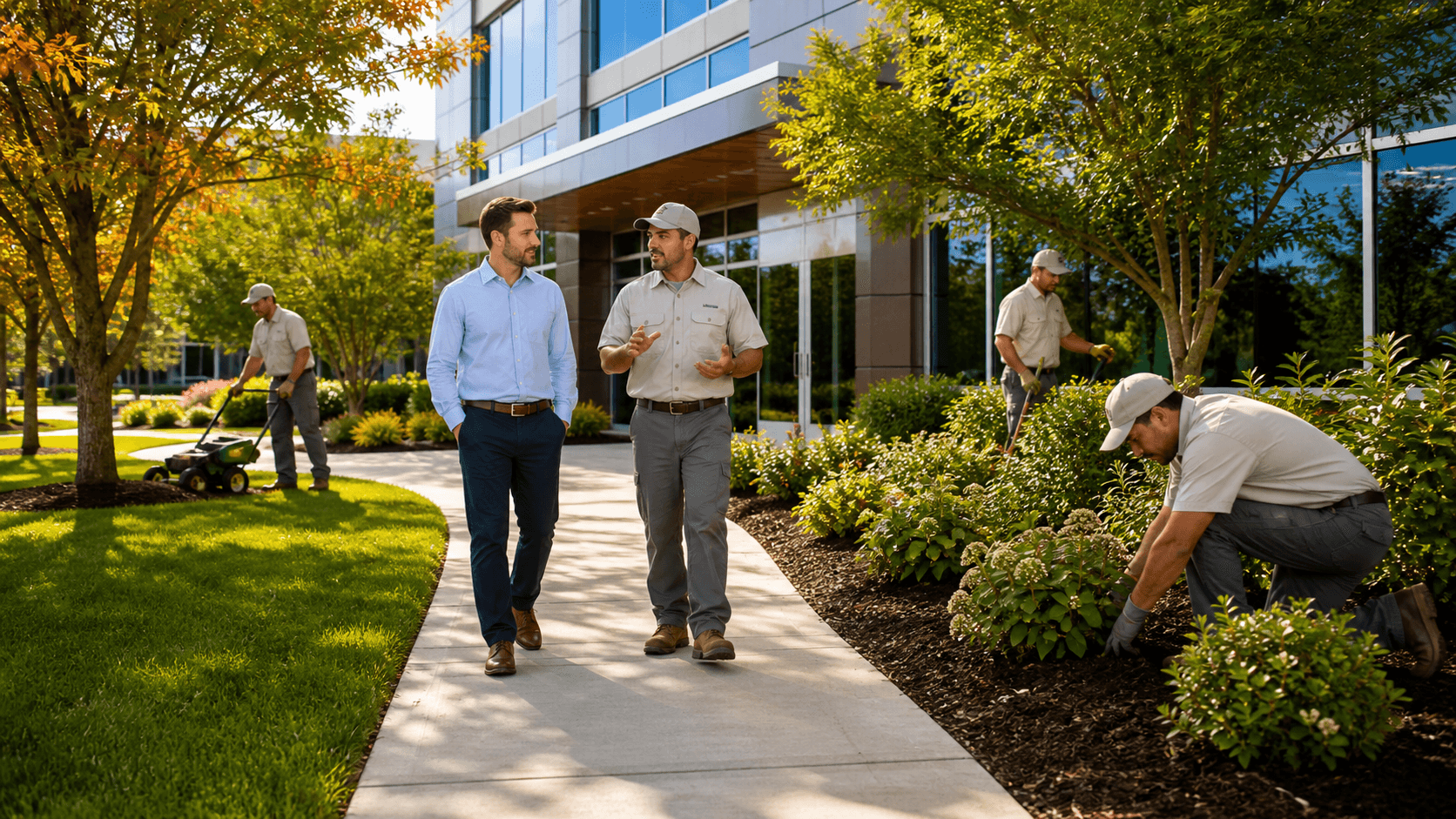
Protect Your Property Before Winter Arrives
Fall puts commercial property managers in a familiar spot: should you repair worn turf and planting areas now, or wait until spring for a larger installation project? The timing matters because it can affect curb appeal, turf recovery, site safety, budgets, and how much work disrupts tenants, employees, customers, and visitors.
At Pugh's EarthWorks, we help commercial properties make that choice based on their actual conditions, not a one-size-fits-all calendar. Mt. Juliet weather, drainage, soil condition, traffic patterns, and your plans for the property all play a part. Sometimes fall work creates the best foundation for spring. Other times, waiting for spring is the smarter move.
Why Fall Renovations Build Stronger Commercial Grounds
Cooler fall weather can be kinder to cool-season turf than the heat of summer. When lawns are thin, compacted, or damaged by traffic, we may recommend services such as aeration, overseeding, soil amendments, weed control, or targeted sod replacement. These steps give turf a chance to settle in before winter dormancy and prepare for a more even spring green-up.
By fall, many issues are easier to spot. Summer stress often reveals bare areas near entrances, rutted turf along walkways, failing plant material, poor drainage, and compacted soil around busy parts of the property. Addressing those concerns now can prevent small appearance issues from carrying into the next growing season.
For commercial landscaping in Mt. Juliet, TN, fall work can also offer practical scheduling benefits. Completing renovation projects before spring helps reduce conflicts with busy maintenance calendars, spring events, and tenant move-ins.
Common fall priorities include:
- Aerating and overseeding worn turf areas
- Refreshing mulch and cleaning planting beds
- Pruning select shrubs and removing declining material
- Restoring clean edges along curbs, walks, and entrances
- Correcting drainage concerns that may worsen during wet weather
Fall is also a good time to coordinate site preparation with winter weather plans. Clear access routes, healthy turf edges, and corrected drainage can make seasonal snow and ice treatment easier to manage when conditions change.
When Spring Installation Makes More Sense
Some projects are better saved for spring, especially when the goal is a major visual update or a new design. If your property needs expanded outdoor areas, redesigned planting beds, upgraded entrances, or new material after winter damage, spring may provide the right installation window.
We often see spring projects tied to construction completion dates, redevelopment plans, tenant-facing improvements, and planned property upgrades. New shrub and perennial beds, annual color, larger sod areas, irrigation updates, and entry features can all fit well into a spring plan when the site is ready.
Plant choices should never be based on looks alone. Our planning considers the conditions that affect long-term performance, including:
- Sun and shade throughout the property
- Drainage patterns and soil moisture
- Expected foot traffic and maintenance needs
- Irrigation coverage and water access
- Mid-South summer heat and site exposure
Early planning matters because spring schedules can become crowded. Wet soil can also delay work at some locations. When design discussions, approvals, irrigation assessments, and material selections happen during fall or winter, installation can begin more smoothly once site conditions allow.
Align Site Work With Mt. Juliet Weather And Traffic
The right time for commercial landscaping in Mt. Juliet, TN depends on more than the month on the calendar. Soil moisture, frost risk, drainage, sun exposure, existing turf health, and the type of material being installed all affect the plan. A site with standing water may need drainage work before fresh sod or new plantings can succeed.
Property use matters just as much. Medical offices, retail centers, multifamily communities, industrial facilities, and corporate campuses all operate differently. We plan work around peak traffic times, delivery routes, parking needs, pedestrian access, and safety expectations whenever possible.
Phasing work can help keep the property functional while improvements are underway. Rather than closing a main entrance or taking over a large parking section at once, crews can work through smaller areas in a planned order. That approach helps protect access for the people who use the property every day.
Control Costs Through Phased Planning
A phased plan helps you address immediate concerns without losing sight of larger property goals. Fall may focus on recovering turf, cleaning beds, pruning, repairing irrigation concerns, and correcting drainage issues. Spring can then focus on new plantings, sod installation, seasonal color, or improved entrance areas.
Planning ahead also gives you more time to prioritize the locations that matter most. High-visibility entrances, tenant common areas, parking lot edges, and customer-facing walkways often deserve attention first. With a clear plan, you can compare options and avoid rushed decisions when problems become more noticeable in spring.
Coordination between property management, maintenance, and grounds teams helps prevent rework. Before work begins, we recommend considering utility locations, irrigation needs, tenant communication, maintenance schedules, and winter weather service routes. A coordinated plan keeps each phase connected instead of treating every issue as a separate project.
Use a Site Review to Choose the Right Season
A professional site walkthrough can show whether your property needs fall turf recovery, drainage correction, irrigation repair, seasonal cleanup, snow and ice preparation, or a longer-term spring installation plan. It also helps identify hidden concerns before new sod, plantings, or mulch are placed over an unresolved problem.
The strongest choice is not always "fall" or "spring." For many properties, a phased approach delivers the best result: repair and prepare the site in fall, then complete larger visual improvements when spring conditions are right.
Build a Landscape Plan That Supports Your Property
Pugh's EarthWorks can assess your site priorities, operational needs, and long-term maintenance goals. Our team delivers tailored commercial landscaping in Mt. Juliet, TN for properties that need reliable results and professional curb appeal. Contact us to discuss your next project with our team.