Restore Curb Appeal Before Fall Demands
Fall is a smart time to correct the wear summer leaves behind on commercial properties. Heat, dry spells, heavy use, storms, and uneven rainfall can all take a toll before October arrives. Thin turf, tired planting beds, washed-out mulch, and cluttered entrances can make an otherwise well-managed site look neglected.
We know your exterior is part of the first impression tenants, customers, employees, visitors, and prospective clients receive. A clean, healthy property supports a professional image and helps people feel more confident as they approach your building. With commercial landscaping in Murfreesboro, TN, a proactive fall plan gives us time to address recovery, cleanup, weed pressure, water concerns, and winter preparation before smaller issues turn into larger repairs.
Audit Summer Damage Before It Spreads
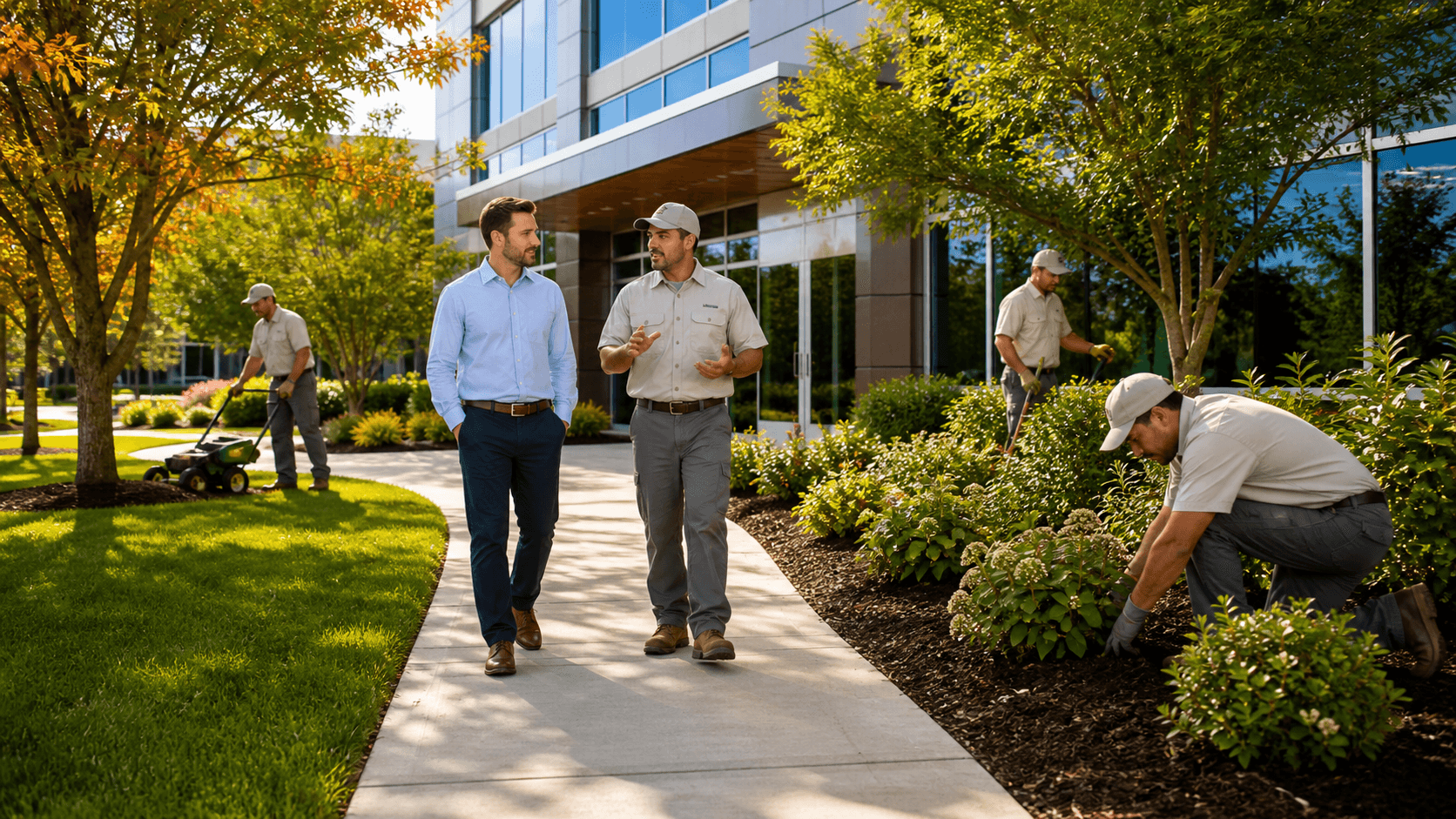
A full property walkthrough is the right starting point. Our team looks beyond the obvious brown patches and fallen limbs to find conditions that may worsen as weather changes. Highly visible areas deserve close attention, including parking lot islands, main entrances, sidewalks, outdoor gathering spaces, and road frontage.
During an assessment, we may identify concerns such as:
- Thinning turf, bare spots, and compacted soil
- Declining shrubs, damaged branches, and dead plant material
- Eroded soil, washed-out mulch, and drainage trouble
- Exposed roots, uneven ground, or overgrown plants near walkways
- Areas that receive too much or too little irrigation
Appearance matters, but so does safety. Overgrown shrubs can affect sightlines near driveways and parking areas. Low branches may interfere with pedestrian paths, while roots or uneven turf can create tripping concerns. We help you sort issues by visibility, safety, and long-term property needs, so urgent items do not get lost in a general cleanup list.
Photos and notes from the walkthrough also give everyone a clearer scope of work. They can help you plan immediate maintenance while tracking concerns that return year after year. If a particular area repeatedly dries out, washes away, or fails to grow healthy turf, we focus on finding the source of the problem instead of treating the same symptom each season.
Revive Turf and Beds with Fall Timing
Cooler fall conditions can give stressed commercial grounds a welcome recovery period. Plants often face less heat pressure, and crews can focus on improving turf and planting beds before winter weather arrives. The right timing depends on the turf type, current weather, irrigation access, and the appearance goals you have for the property.
For worn turf, our recommendations may include mowing adjustments, aeration where appropriate, overseeding in suitable areas, sod replacement for prominent bare spots, and soil improvement. Sod can provide a fast visual improvement near entries, signs, or customer-facing spaces, while broader turf recovery may need a different approach. We match the work to the site rather than applying the same treatment everywhere.
Planting beds deserve equal attention after a long summer. Failed annuals, damaged plants, and sparse mulch can make an entire entrance feel tired. Bed restoration often includes removing dead material, pruning damaged growth, refreshing seasonal color where it fits, checking plant spacing, and replenishing mulch.
Fresh mulch does more than make beds look clean. It can help hold moisture, moderate soil temperature, and reduce weed pressure. When replacement plants are needed, we consider sun exposure, drainage, expected upkeep, and the look you want visitors to see when they arrive.
Control Weeds, Debris, and Water Issues
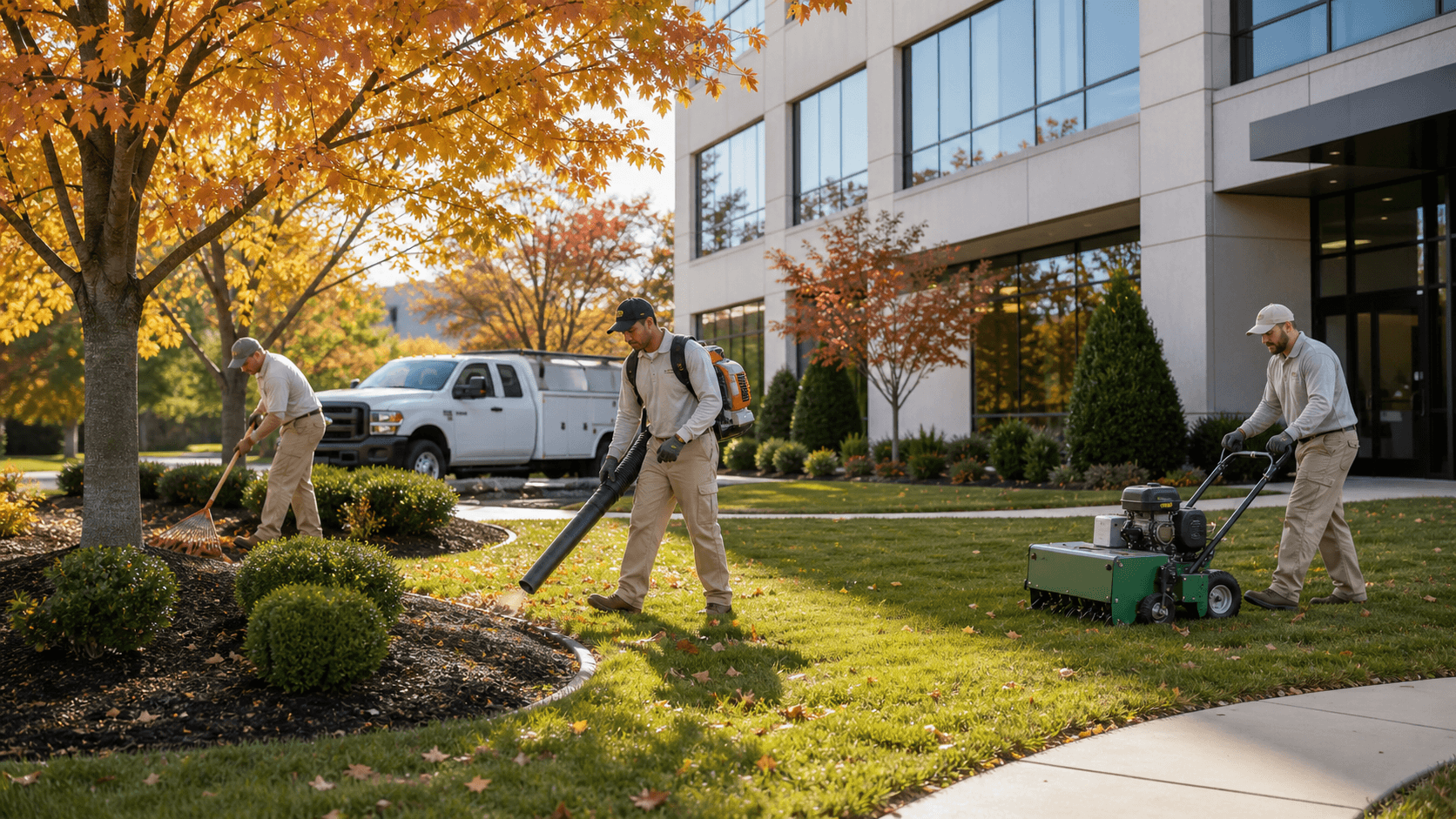
Fall cleanup is not only about appearance. Leaves, sticks, grass clippings, and storm debris can block drains, hold moisture against turf, create slick walking surfaces, and make a property feel uncared for. Consistent cleanup keeps entrances, sidewalks, parking areas, and beds looking orderly as leaf drop increases.
Thin grass and open beds also give cool-season weeds room to take hold. Early identification and properly timed treatment can limit competition around healthy grass and plants. We watch for weed activity as part of routine property care, rather than waiting until it becomes highly visible.
Water management should also be reviewed after summer storms. Irrigation systems may need adjustments as temperatures cool, especially where new sod, seasonal color, or recovering plants need steady moisture. Our crews look for conditions including:
- Pooling water near buildings, walks, or parking areas
- Erosion around beds, slopes, and drains
- Broken sprinkler heads or irrigation zones that miss their target
- Mulch and soil displaced by heavy rain
- Dry areas that may point to coverage or drainage concerns
Addressing these details in fall helps protect the work completed during the season. It also helps prevent wasted water and reduces the chance that a drainage issue will sit unnoticed until colder, wetter conditions make it harder to manage.
Prepare for Cold Weather Risks
October is a good time to plan ahead instead of reacting to the first freeze or winter storm. Seasonal pruning, removal of hazardous limbs, protection for sensitive plant material, and irrigation winterization when conditions call for it can help your site transition more smoothly into winter.
We also recommend coordinating grounds maintenance with snow and ice treatment before weather becomes urgent. High-priority zones should be clearly identified, including entrances, sidewalks, ramps, accessible routes, loading areas, and parking lots. Clear expectations help us respond in a way that supports safer access for employees, tenants, and visitors.
A communication plan can prevent confusion when conditions change quickly around Murfreesboro. It should identify who can approve extra work, where treatment materials may be stored, which areas need the fastest response, and how service updates will be shared. Pugh's EarthWorks supports commercial properties across the Mid-South with lawn maintenance, sod installation, seasonal cleanup, property management, and snow and ice treatment.
Build a Fall Plan That Protects Your Site
A fall property assessment gives us a clear view of post-summer concerns and helps shape a maintenance strategy around your site's needs. By addressing worn turf, stressed beds, debris, weeds, drainage concerns, and winter risks in an organized order, you can protect plant investments and maintain a cleaner, safer exterior.
The best plan is one that responds to what your property is showing now while preparing for what the next season may bring. Taking care of visible damage and recurring trouble spots before winter helps keep maintenance focused, reduces avoidable surprises, and supports a polished appearance through changing weather.
Keep Your Property Looking Its Best Year-Round
Pugh's EarthWorks provides dependable commercial landscaping in Murfreesboro, TN tailored to the needs of your property. Our team can help you prioritize seasonal services, maintain curb appeal, and keep your grounds ready for tenants, customers, and visitors. Contact us to discuss a maintenance plan that fits your property.