Landscaping That Keeps Pace with Nashville Growth
Rapid growth is reshaping Nashville's main corridors. Routes from downtown to the airport, busy retail hubs like Cool Springs, and new mixed-use districts are packed with cars, people, and constant construction. For property managers, HOAs, and developers, these areas bring huge opportunity, but also more pressure on outdoor spaces than a typical site.
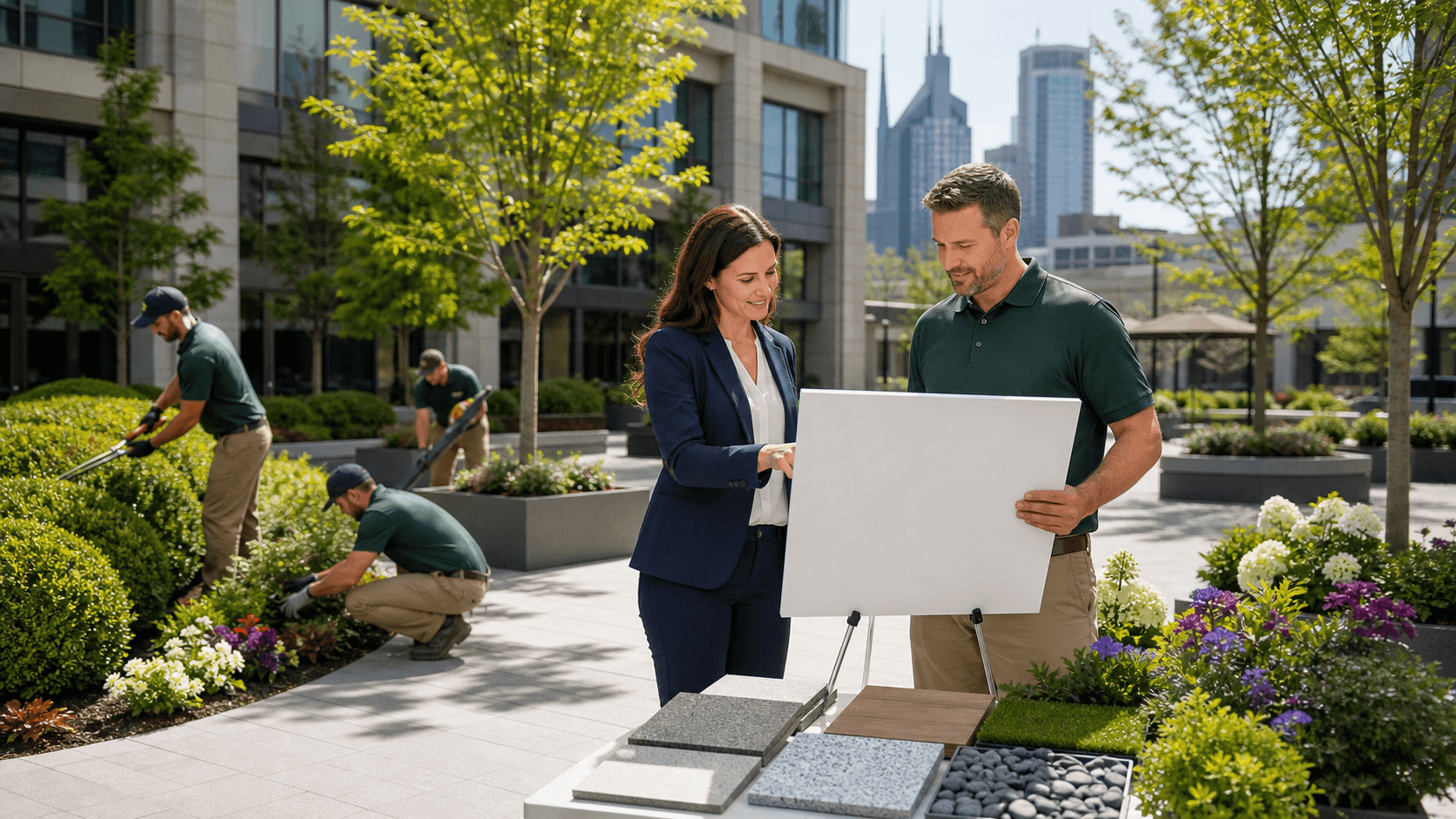
High-traffic, rapid development properties deal with heavy foot traffic, tight build schedules, constant tenant change, and nonstop public visibility. The outdoor areas are not just "nice to have." They affect property value, tenant satisfaction, safety, and brand image every single day. A reliable commercial landscaper in Nashville becomes a long-term partner in keeping these sites looking sharp and working smoothly.
In this article, we will walk through smart design ideas, maintenance planning, seasonal strategies, and long-term management approaches that help busy Nashville properties keep up with growth instead of falling behind it.
Designing Landscapes for High-Traffic Growth Corridors
Growth corridor properties need tough, smart design first, then pretty details. Plants must survive heat, car exhaust, reflected sunlight from glass and pavement, and compacted soil from constant use.
Good plant choices usually focus on:
- Heat-tolerant shrubs and trees that can handle long, hot summers
- Plants that accept less-than-perfect soil near roads and parking lots
- Varieties with strong root systems to hold sloped or disturbed ground
- Drought-tolerant material that still looks good with managed irrigation
Safety and visibility are just as important as looks. At entrances and intersections, plants cannot block sightlines for drivers or hide signs and lighting. Thoughtful design keeps views clear while still feeling green and inviting.
Smart safety-focused design often includes:
- Lower plant heights at corners and drive lanes
- Trees placed so they frame a sign, not hide it
- Lighting laid out with plant growth in mind, so fixtures do not get buried
- Open views around doors, sidewalks, and rideshare zones
For curb appeal from the road, color and texture do a lot of the work. A cost-effective approach is to create a few strong focal points instead of trying to make every inch dramatic.
We like to plan for:
- Seasonal color in key spots, such as entries and main corners
- Evergreen structure so the property looks cared for all year
- Simple, repeating plant groups that are easy to maintain and still eye-catching
In growth areas, one thing is certain: change. New buildings, new tenants, new access roads. Good design allows the site to adapt.
Helpful design ideas include:
- Flexible planting beds that can be expanded or simplified as needs change
- Modular hardscape elements, such as planters or seating, that can move with tenant shifts
- Irrigation broken into smart zones, so changes in one area do not disrupt the whole property
Smart Maintenance Strategies for Rapid-Development Sites
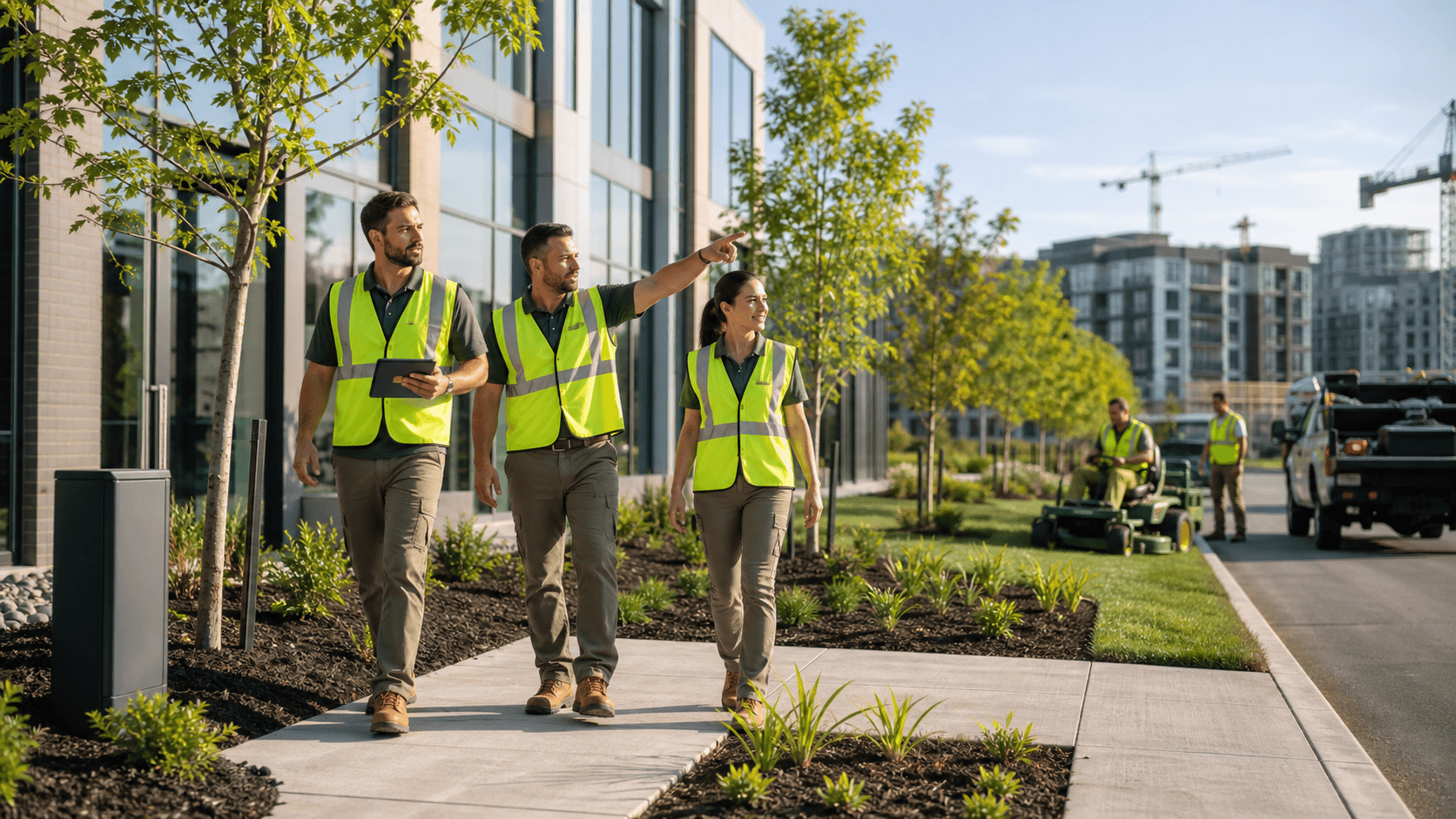
Even the best design fails without the right maintenance plan. Growth corridor properties cannot have noisy equipment and blocked parking at the worst possible times. Service needs to fit around how the property actually works each week.
Thoughtful schedules may include:
- Off-peak mowing and trimming outside of main shopping or office hours
- Detail work early in the day before customers arrive
- Seasonal cleanups planned around events, grand openings, or leasing cycles
Heavy wear is a constant issue. Turf near sidewalks, rideshare areas, and delivery zones breaks down fast. Without a plan, you get bare spots, trip hazards, and muddy edges.
To protect these high-use areas, we often recommend:
- Reinforcing edges with groundcovers or decorative gravel instead of turf
- Converting the hardest-hit spots to hardscape where appropriate
- Regular repair of thin turf before it becomes a safety concern
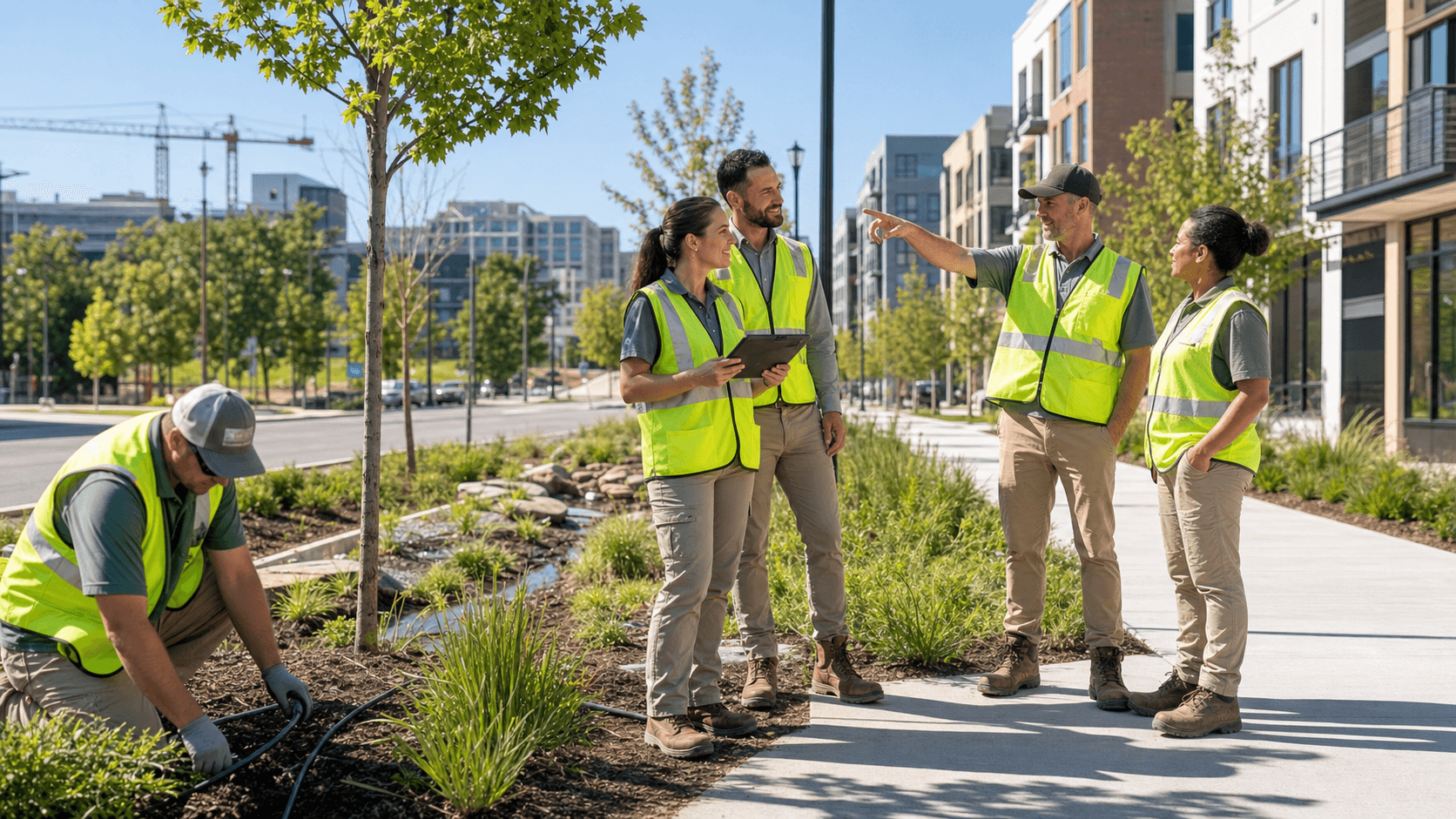
Rapid development also changes how water moves across a site. A new building next door or an added drive lane can change drainage patterns and stress plants or hardscape.
A reliable commercial landscaper in Nashville will:
- Watch for signs of poor drainage, like standing water or erosion
- Check irrigation coverage and timing as site conditions change
- Track plant health over time, not just at installation
With many properties across a corridor, property managers need clear communication. Digital reports, photos, and simple service notes make it easier to compare sites and keep tenants informed.
Seasonal Planning for Nashville Heat, Storms, and Winters
Nashville summers bring long stretches of heat and humidity. Growth corridor properties, with all their concrete and asphalt, feel even hotter. Planning for summer stress helps protect the site before problems show.
Warm-season planning often includes:
- Adjusting irrigation schedules for early morning watering and water efficiency
- Using mulch to help soil hold moisture and keep roots cooler
- Choosing drought-tolerant plants in the most exposed areas
Severe storms can also affect these busy sites. High winds, heavy rain, and sudden downpours can lead to erosion and damage.
Good storm readiness focuses on:
- Healthy turf and groundcover to hold soil on slopes and roadside edges
- Keeping drains, swales, and inlets clear of debris
- Securing loose items such as small planters or temporary decor
- Having a clear plan for post-storm cleanup to restore access quickly
Winters in Middle Tennessee can swing between mild days and ice events. On growth corridors, safe, open access for customers, employees, and delivery services is a priority.
Winter planning often includes:
- Pre-season reviews of snow and ice routes for sidewalks and key parking areas
- Protecting sensitive plantings near areas treated with de-icing products
- Trimming back plants that could droop into paths under snow or ice load
A year-round management calendar, tuned to Middle Tennessee weather and local leasing cycles, keeps work predictable. It spreads major tasks across the year so the property never has to "catch up" after a season of neglect.
Long-Term Landscape Management for Busy Commercial Properties
Growth corridor sites benefit from thinking in years, not weeks. As the surrounding area develops, the property's outdoor spaces should grow with it. A multi-year plan ties outdoor improvements to leasing goals, capital projects, and expected area changes.
A longer view might cover:
- When trees will need thinning or structural pruning
- How often beds will need renovation or plant replacement
- Where future drive lanes, patios, or amenities might be added
For companies and groups with multiple Nashville-area locations, consistent standards are key. Customers and tenants notice when one site looks sharp and another looks tired.
Shared standards might include:
- The same mowing heights and edging style across all sites
- Clear expectations for bed detailing and weed control
- Seasonal color guidelines that match brand style and visibility goals
- Signage kept clean and unobstructed at each entrance
Working with a reliable commercial landscaper in Nashville like Pugh's EarthWorks helps reduce emergency fixes, support hardscape life, and keep properties ready for new tenants. Periodic "refreshes" every few years keep maturing sites current with evolving styles and neighborhood character, without starting from scratch each time.
When design, maintenance, seasonal planning, and long-term vision all line up, Nashville's growth corridor properties can handle heavy use, constant change, and high expectations, while still looking welcoming every day.
Get Started With Your Project Today
If you are ready to improve the look, safety, and long-term performance of your commercial property, we are here to help. As your trusted partner at Pugh's EarthWorks, we take the time to understand your goals and create a plan that fits your budget and timeline. Learn how a reliable commercial landscaper in Nashville can simplify your property care and deliver consistent results. To discuss your needs or request a proposal, simply contact us today.