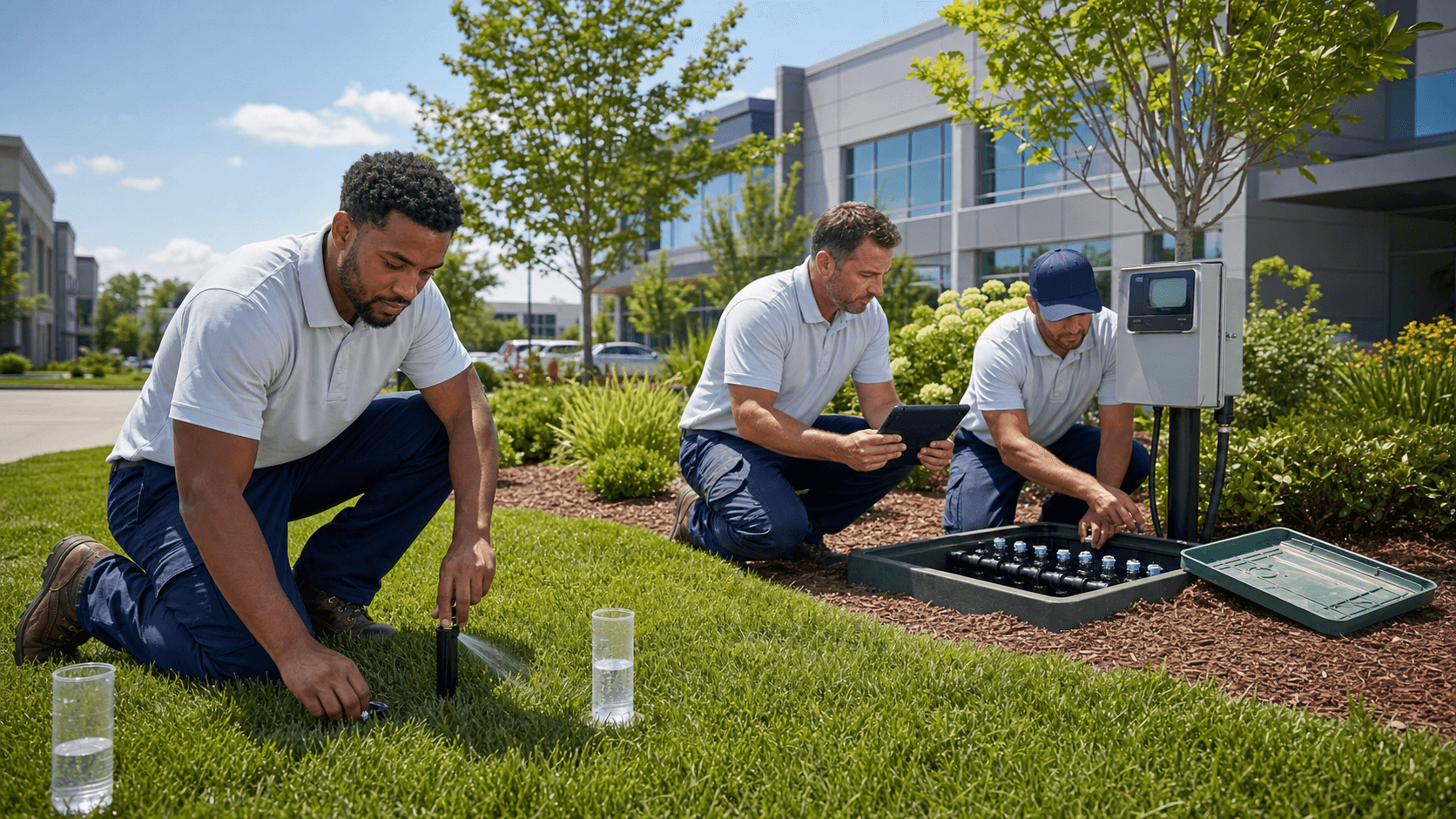
Smart Watering Choices That Boost Curb Appeal
Good irrigation is one of the main reasons a commercial property looks healthy, green, and inviting. It is also one of the main reasons water bills stay under control. For properties in the Nashville area, irrigation decisions affect how the grounds look, how they perform, and how much stress they create for the people who manage them.
Hot, humid summers, pop-up thunderstorms, and changing water rules mean the old "set it and forget it" sprinkler approach does not work anymore. Class A office parks, retail centers, HOAs, medical campuses, schools, and other sites need systems that can respond to real conditions, not just a timer that runs the same way every day.
At Pugh's EarthWorks, we focus on irrigation as a long-term strategy, not a one-time install. We look at how design, installation, and ongoing care can support your property goals, from curb appeal and safety to budgets and water use. In this article, we will walk through how to choose systems, plan for seasons, use smart technology, stay compliant, and protect both your grounds and your bottom line with commercial irrigation services in Nashville.
How Nashville's Climate Shapes Irrigation Strategy
Middle Tennessee has its own mix of weather that makes irrigation planning a real priority. Summers are hot and often dry from July through early fall. Spring and fall are milder, with more regular rain. Winters bring some cold nights and occasional freezes, but not a deep freeze that locks the ground for months. On top of that, intense pop-up thunderstorms can dump a lot of water all at once, then leave long gaps with no rain.
Those patterns affect how we plan watering schedules, run times, and zones. Many commercial sites in and around Nashville have:
- Clay-heavy soils that drain slowly
- Sloped areas that let water run off before it can soak in
- Mixes of sun and shade across the same property
If a system runs too long on clay or slopes, water can pool, run into drains, or wash across walks and drives. If it runs too often, turf roots stay shallow, so grass suffers as soon as the top inch of soil dries out. Shallow roots also make turf weaker and more open to disease during humid, muggy stretches.
This is why commercial properties need zone-specific irrigation plans instead of one global setting. Turf, trees, shrubs, seasonal color beds, and high-traffic areas all have different needs. Shaded courtyards hold moisture longer than open parking lot islands. South-facing slopes dry faster than north-facing walls. Professional commercial irrigation services in Nashville take these microclimates into account so each zone gets what it needs, not what the next zone needs.
Designing Efficient Systems for High-Visibility Properties
First impressions start at the curb. Entrances, signage beds, and street frontage are often the first things people notice as they arrive. If these areas dry out or burn up in late summer, it affects how the whole property feels, even if most of the site looks fine.
Thoughtful irrigation design helps keep those key views green and healthy. Different areas often need different types of equipment, such as:
- Rotors for large, open turf where long throws are needed
- Sprays or high-efficiency nozzles for smaller lawn spaces
- Drip lines for shrub beds, foundations, and tight planters
- Bubblers or dedicated emitters for trees
How the heads are laid out makes a big difference. Good design matches precipitation rates so every head in a zone applies water at the same pace. Pressure regulation keeps misting and overspray down. Proper spacing helps avoid dry gaps, puddles, and water spraying onto sidewalks, windows, or roadways.
Complex commercial layouts bring extra challenges. Narrow strips along parking lots, medians between traffic lanes, steep banks, and spots close to foundations or hardscape all need special attention. At Pugh's EarthWorks, we design irrigation as part of the full site plan, tying it in with planting plans, lighting, signage, and traffic flow so the system supports how the property actually works day to day.
Smart Controllers and Sensors That Cut Water Waste
Modern irrigation technology has changed what is possible on commercial sites. Smart controllers, Wi-Fi-capable systems, rain sensors, soil-moisture sensors, and flow monitoring tools give property managers better control and better information.
Smart controllers can adjust run times based on temperature, expected plant water use, and recent rainfall. That is especially helpful through the hottest stretch of Nashville's summer, when a normal schedule might be too much one week and not enough the next. Rain sensors can pause watering during and after a storm so you are not feeding a soggy lawn. Soil sensors can help make sure zones only run when the root zone is actually drying out.
Flow sensors and master valves add another layer of protection. If a line breaks or a head gets knocked off, the system can detect unusual flow and shut the affected area down. That protects plantings, helps avoid water damage around buildings, and prevents surprise line items on a utility bill.
For multi-site owners, HOAs, and campuses, remote management is a major advantage. With the right setup, adjustments can be made quickly across several properties when drought rules change, or storms roll through. When commercial irrigation services in Nashville understand these tools, the result is:
- Less water waste
- Healthier turf and plants
- Easier compliance with local watering rules
Seasonal Irrigation Adjustments for Year-Round Protection
An irrigation system should not run the same way all year. Seasonal changes in Nashville call for seasonal adjustments.
In summer, during peak growing season, deeper, less frequent watering is usually better for turf than short daily cycles. Early-morning schedules help reduce evaporation and lower the risk of fungal issues that thrive in warm, wet conditions. New plantings and high-traffic turf often need special monitoring so they do not dry out between cycles.
In fall, it helps to gently pull run times back while roots are still active. This supports turf recovery from heat stress and lets plants build strength before winter. Beds and trees can often be stretched out between cycles, while still keeping moisture where roots need it.
Winter brings freeze risk. Proper winterization is important for protecting backflow devices, valves, and lines from damage. Depending on the system and site, that might mean a full blow-out, a safe shut-down, or a carefully set low-use plan for areas that still need some water.
Spring is the time to wake the system up. A solid start-up visit should include:
- Checking every head for clogs, damage, or misalignment
- Testing valves and controllers
- Confirming coverage so there are no dry spots
- Inspecting for leaks or pressure problems
When irrigation is tied into a year-round commercial maintenance plan, all of these seasonal changes can match mowing, pruning, color changes, and other services so the entire site works together.
Compliance, Risk Management, and Property Value
Poorly managed irrigation can create more than ugly turf. It can create real risk. Overspray on sidewalks can lead to slippery walking surfaces. Overwatering near buildings can cause problems with foundations or basements. Plant loss not only looks bad, it also means extra replacement work and disruption.
Backflow prevention is another key piece for commercial and institutional sites. Properly installed and tested backflow devices help protect public water supplies and keep properties in line with local rules. Regular inspections and records show that systems are being taken care of the right way.
Consistent irrigation records and documented maintenance visits can support insurance needs, facility risk plans, and future capital planning. When you know how systems have been performing and what has been repaired, it is easier to see when upgrades or zone changes are worth the investment.
There is also a direct connection between green, well-kept grounds and how a property is viewed. Healthy turf, thriving trees, and colorful beds suggest a property that is cared for. That can help support occupancy rates, tenant satisfaction, and overall property value. Experienced commercial irrigation services in Nashville understand local codes, permitting needs, and good practices for large sites like campuses, municipal grounds, and corporate properties.
Partner with Pugh's EarthWorks for Smarter Irrigation
Irrigation is more than pipes, valves, and sprinkler heads. It is an ongoing strategy that shapes curb appeal, safety, water use, and how easily your property team can do its job. For commercial sites across the Nashville area, smart irrigation planning is one of the most effective ways to protect both the look and the life of the grounds.
At Pugh's EarthWorks, we provide commercial irrigation design and installation, smart controller upgrades, seasonal start-up and winterization, repair work, and coordination for backflow testing, all integrated with full-service grounds care. Our goal is to match the system to the property, not force the property to fit the system. A mid-summer irrigation review often reveals small changes that can prevent late-season stress and keep your site looking strong all the way through the heat.
Get Started With Your Project Today
If you are ready to upgrade efficiency, conserve water, and protect your landscape investment, our team is here to help. Explore our commercial irrigation services in Nashville to design, install, or optimize a system tailored to your property. At Pugh's EarthWorks (Nashville), we collaborate with you to create a long-term irrigation strategy that fits your budget and maintenance needs. Have questions or need a quote fast? Just contact us and we will follow up promptly.