Stop Wasting Curb Appeal: Get Grounds Maintenance Right
Curb appeal is not just a nice extra for commercial properties in Nashville. For offices, apartments, HOAs, and institutions, the way the outside looks can affect leasing, customer traffic, and even investor confidence. In a busy market, the property that looks clean, safe, and well cared for is the one people remember.
The problem is that many sites seem fine at a quick glance but still have hidden grounds maintenance issues. These issues shorten plant life, push up repair costs, and even create safety risks. In this article, we will walk through common grounds maintenance mistakes in Nashville, TN, and how smart planning can prevent them, especially as lawns and plant beds move into heavy growth.
Ignoring Seasonal Timing in Middle Tennessee
Middle Tennessee weather likes to keep people guessing. We see wet springs, hot and humid summers, surprise dry spells, and the occasional cold snap. Grounds work has to match these patterns. When timing is off, even good work produces weak results.
Common timing mistakes we see include:
- Pruning flowering shrubs at the wrong time, which cuts off new buds
- Overseeding turf after soil temps are already too high or too low
- Putting down pre-emergent weed control after weeds have started popping up
- Fertilizing right before a heavy rain that washes product away
When this happens, plants get stressed, weeds take over, and property managers are stuck paying for extra fixes. A professional grounds maintenance calendar that is tuned to our Nashville area climate can help keep everything on track. That means setting up clear schedules for:
- Mowing frequency as growth speeds up or slows down
- Seasonal pruning windows for shrubs and trees
- Proper timing for pre-emergent, post-emergent, and fertilizers
- Bed cleanups that match leaf drop and storm patterns
When timing is handled correctly, lawns stay thicker, beds stay cleaner, and plants stand a better chance against weather swings.
Treating Irrigation as "Set It and Forget It"
Many commercial properties in Nashville still run irrigation on the same settings all year. That is a quiet way to waste water and damage plants. Turf and beds need very different amounts of water in April than they do in August or November.
Some of the irrigation problems we often see are:
- Heads out of alignment, hitting sidewalks, cars, or windows
- Poor coverage that leaves dry patches and muddy spots side by side
- Runoff flowing across parking lots and walkways
- Systems watering in the middle of the day when much of the water evaporates
- Settings that ignore local watering rules or restrictions
All of these issues can lead to thinning turf, disease in soggy areas, and slippery concrete. Regular irrigation audits catch problems early. Seasonal reprogramming matches watering to rain patterns, daylight hours, and temperature changes. Smart controllers can also help adjust run times when we get a stretch of storms or a sudden heat wave.
Instead of treating irrigation as a one-time setup, it should be part of an ongoing grounds maintenance plan. That way, the system supports plant health and helps control water bills at the same time.
Overlooking Safety, Liability, and Accessibility Risks
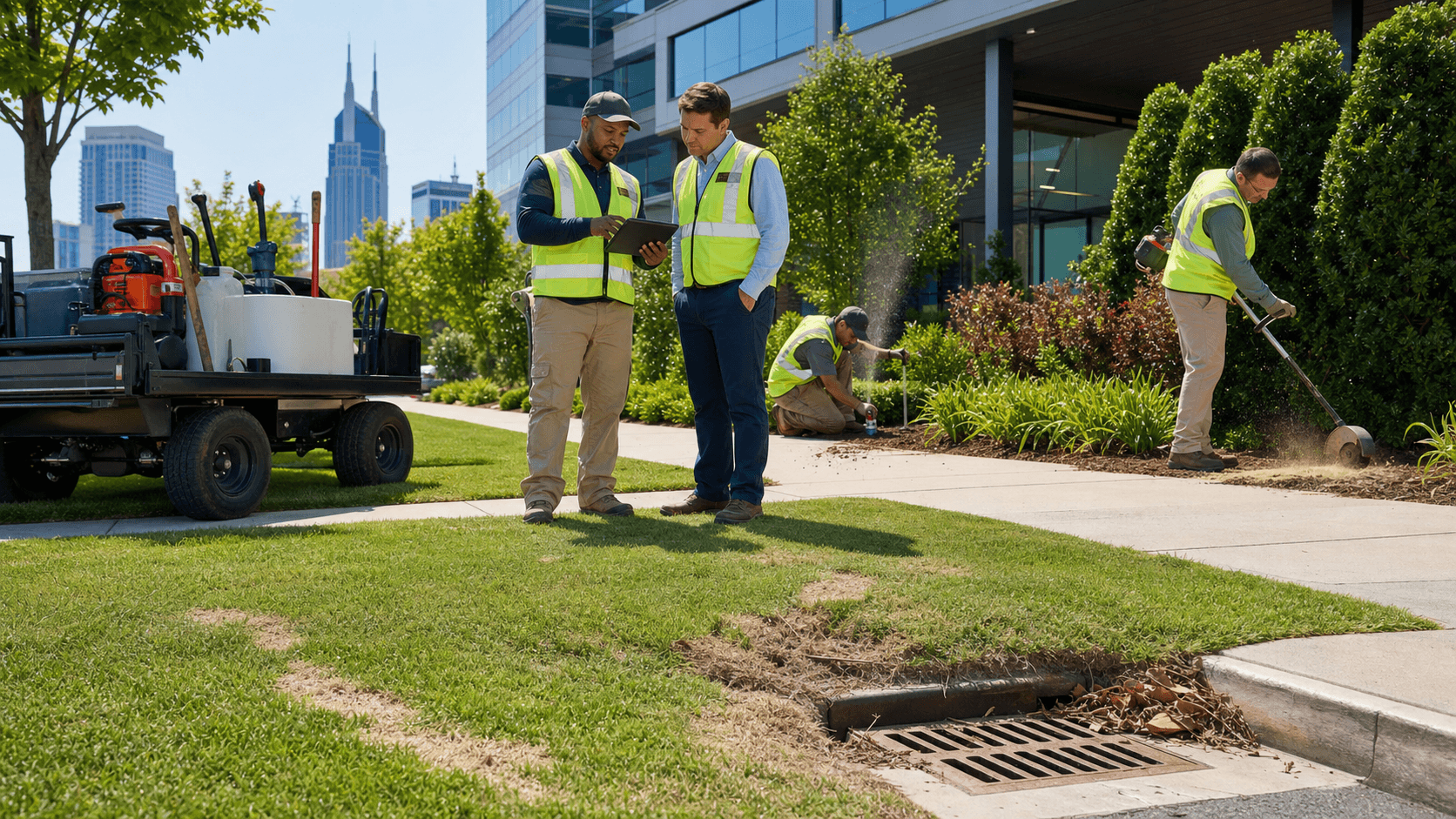
Grounds maintenance is not just about looking pretty. It also plays a big part in safety, access, and liability. Small details on the property can lead to big issues if they are ignored.
Areas that often create risk include:
- Uneven turf along high-traffic walkways
- Low branches hanging over sidewalks, drives, or parking areas
- Leaf buildup that hides curbs or becomes slick when wet
- Overgrown shrubs blocking views at corners or drive exits
Tree roots and plantings in the wrong place can crack sidewalks, tilt pavers, and squeeze into building edges. Shrubs that spread into ADA paths or near entrances can make access harder for visitors and residents.
A helpful approach is a regular, structured site inspection that looks at:
- Trip hazards along walks and entries
- Visibility around signage and traffic points
- Plant growth near doors, ramps, and stairs
- Lighting coverage in planted areas at night
When maintenance crews are trained to watch for these issues, they can fix small problems before they become big ones. The result is a property that does not just look nice, but also supports safety, access, and compliance.
Focusing Only on Mowing While Neglecting Details
Many properties fall into what we call the "mow and go" trap. The grass gets cut, and from the street it looks okay for a few days. But up close, the details tell a very different story.
Common signs of a mow-only approach include:
- Weeds taking over plant beds while turf looks short but weak
- Edges along curbs, sidewalks, and drives that creep out and look messy
- Trash and debris collecting in shrub beds and fence lines
- Trees with low limbs, deadwood, or old stakes still attached
These details quietly chip away at your professional image. Overgrown bed lines make the property look older. Faded or thin mulch lets weeds move in and dries out shrubs. Dead plants left in place send the message that nobody is really in charge.
A complete commercial grounds program should cover:
- Turf care, including edging, weed control, and seasonal treatments
- Bed care, including weeding, mulch touch-ups, and shaping
- Tree and shrub maintenance, from pruning to health checks
- Seasonal color rotations where appropriate
- Cleaning of hard surfaces near plant areas
When all these pieces are aligned, the property shows a consistent level of care from the street to the front door.
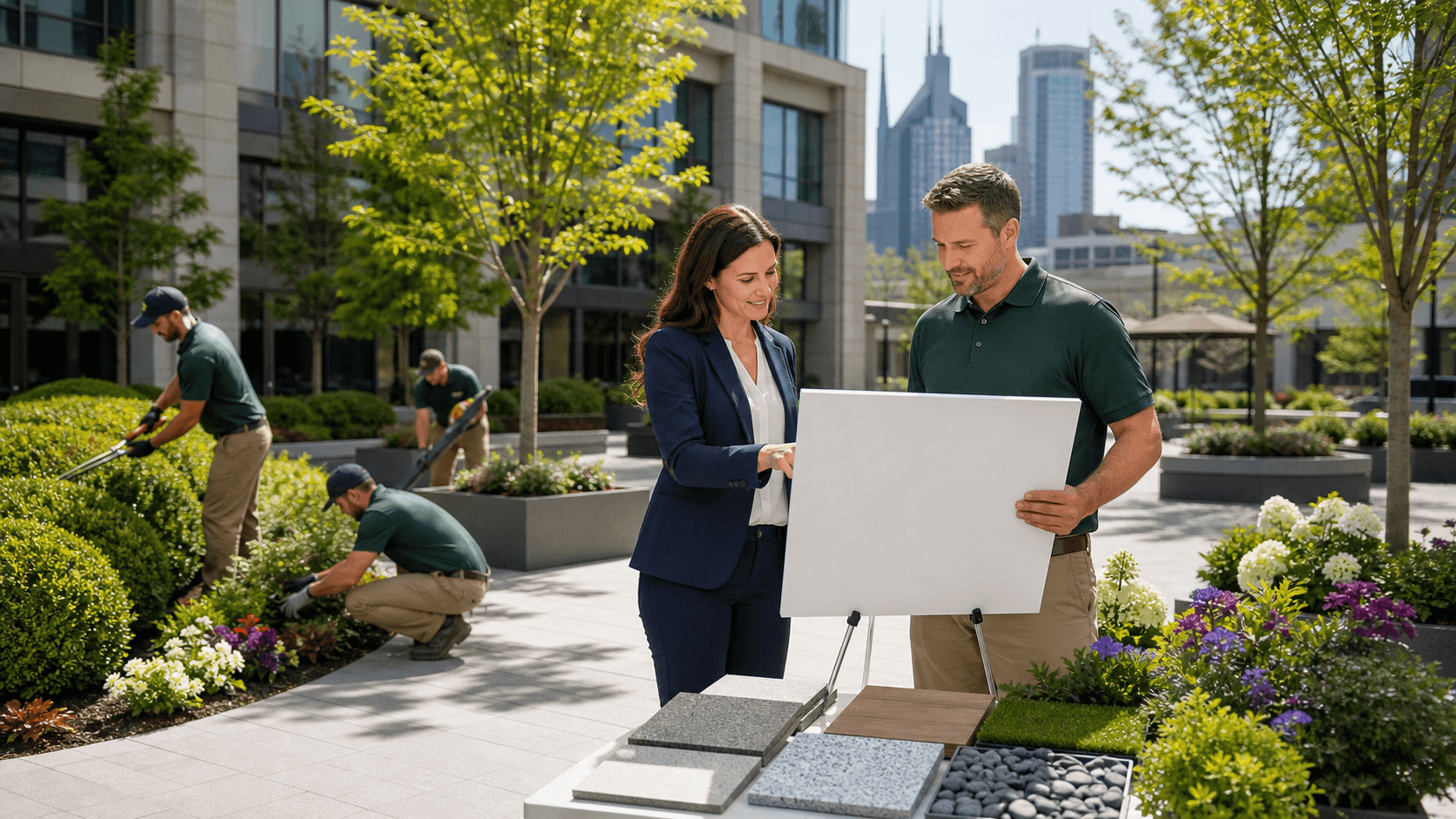
Underestimating the Power of Design and Plant Selection
Many Nashville properties are working with old designs or plant lists that do not fit the site anymore. Some were installed without regard to long-term growth, traffic patterns, or our Middle Tennessee climate. The result is high upkeep and constant frustration.
Common design and plant selection problems include:
- High-maintenance plants placed in high-traffic spots, where they get damaged
- Thirsty turf in full-sun trouble areas that stay hot and dry
- Shrubs and trees that outgrow their spaces and need constant cutting back
- Beds that are hard to access for maintenance, so work gets delayed
When a property keeps fighting the same issues, it can be a sign that the layout or plant mix needs a fresh look. Redesigning key areas can provide:
- Plant choices that handle heat, humidity, and local soil better
- Drought-tolerant options in problem zones to reduce water needs
- Scaled plant sizes that fit their spaces as they mature
- Bed shapes and access paths that make routine care smoother
Thoughtful design updates can cut down on long-term maintenance, reduce replacements, and keep the site looking good through more of the year.
Turn Grounds Problems Into a Nashville Asset
When these common mistakes are avoided, exterior grounds stop being a constant headache and start working as an asset. Clean, safe, and well planned outdoor areas help attract and keep tenants, residents, customers, and visitors.
If you manage or own a property and see some of these issues on your site, it can help to pick the top two or three problem areas and tackle those first. Over time, a focused approach to grounds maintenance in Nashville, TN can turn your exterior from "just okay" into a true reflection of the care and professionalism inside the buildings.
Get Started With Your Project Today
If you are ready to improve the safety, appearance, and long-term health of your commercial landscape, we are here to help. Our team at Pugh's EarthWorks specializes in dependable grounds maintenance in Nashville, TN tailored to your property's needs and budget. Tell us about your site, challenges, and goals, and we will recommend a practical plan that works year-round. To schedule a consultation or request a quote, simply contact us today.