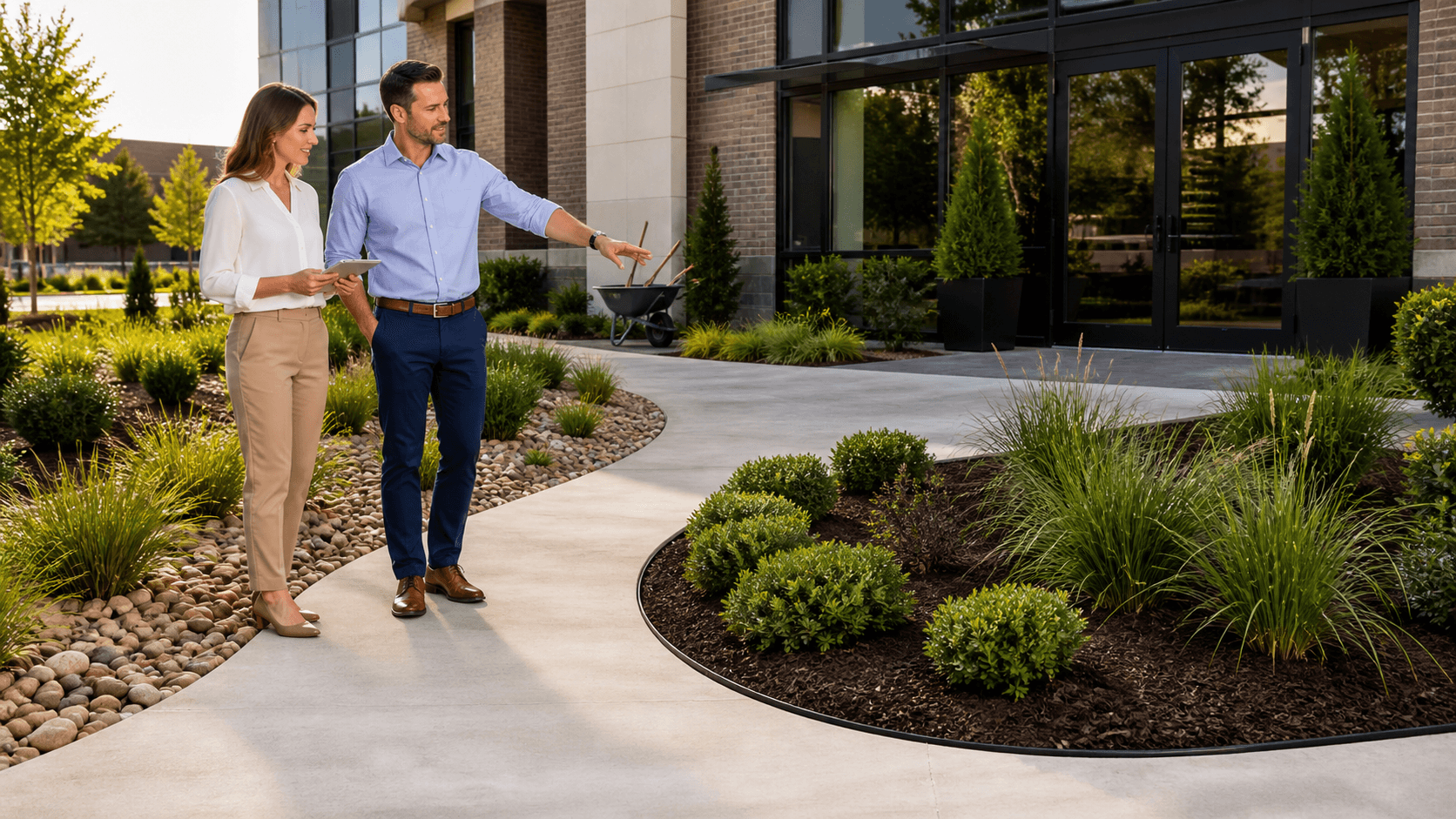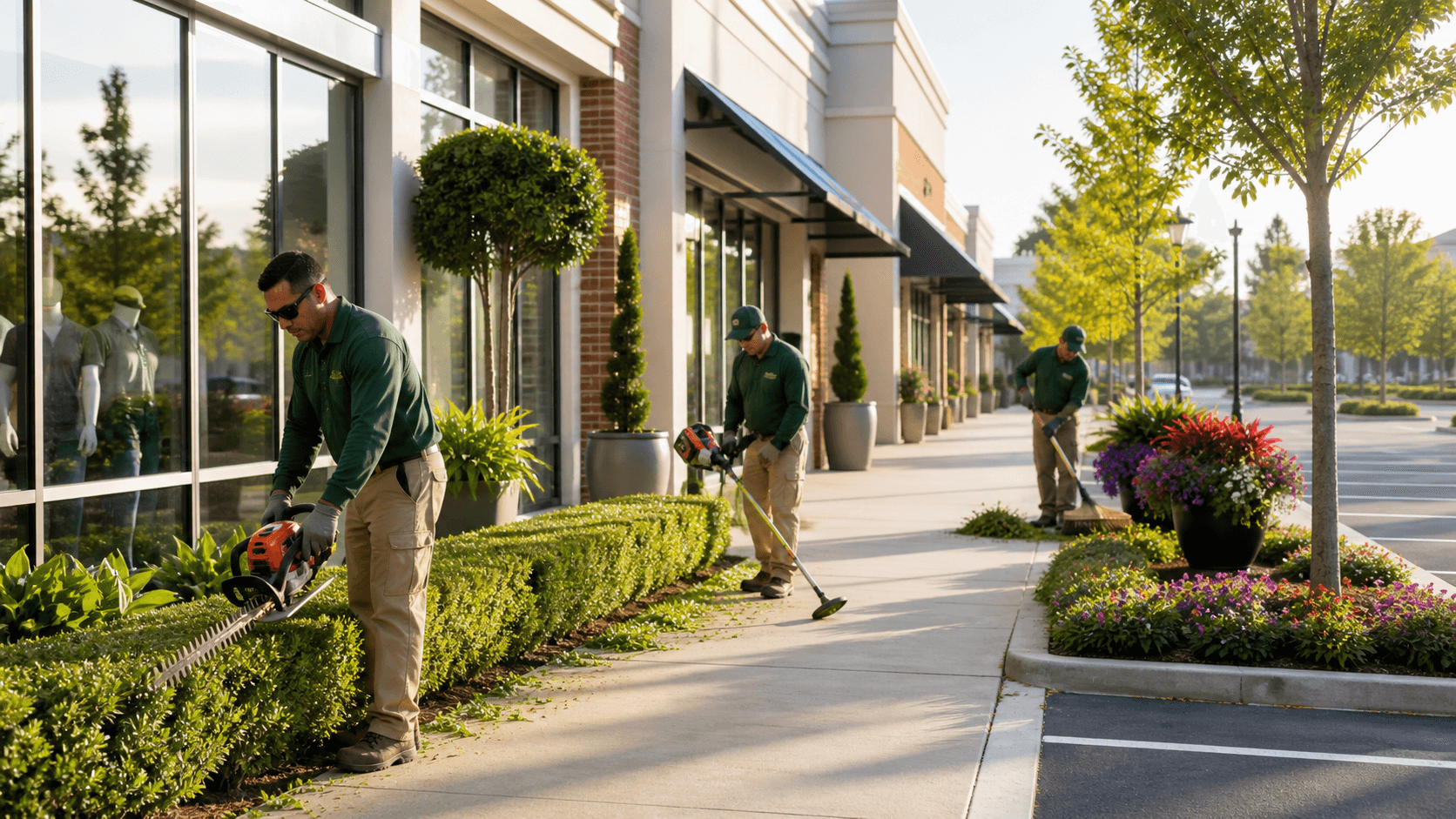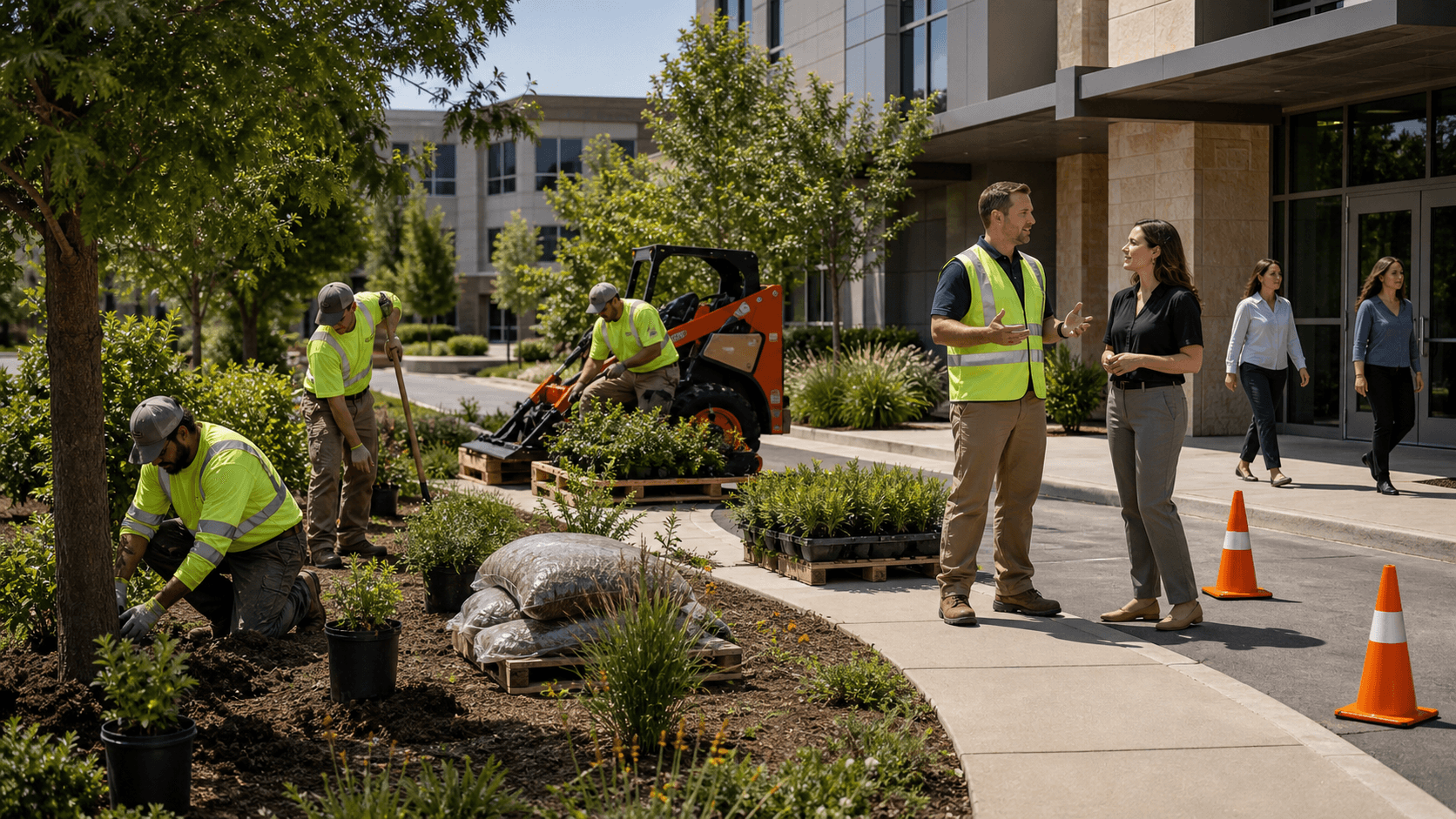
Commercial property improvements do not have to bring daily business to a halt. With the right plan, we can refresh planting areas, install sod, improve drainage, and clean up outdoor spaces while employees, customers, tenants, patients, and delivery drivers continue using the site.
Occupied properties need more coordination than empty ones. Before work begins, we look at how people move through the property, when traffic is busiest, and which areas must remain open. That preparation helps us make progress without creating unnecessary confusion or unsafe conditions.
Improve Curb Appeal Without Interrupting Your Business
A well-kept exterior helps your property make a strong first impression, but installation work can affect parking, walkways, entrances, and loading areas. Our job is to plan around those realities instead of treating an active property like an open construction site.
Commercial landscape installation contractors must account for daily operations from the start. That can include employee arrivals, customer parking, delivery schedules, fire lanes, ADA-accessible paths, and trash pickup access. By discussing these details with property managers early, we can build a plan that protects the way your site works.
For properties across Nashville, Memphis, Little Rock, Jackson, TN, and Southaven, fall can be a practical time to complete outdoor improvements before winter weather arrives. Cooler conditions may support planting and sod installation, while drainage corrections and cleanup work can help prepare the property for wetter months.
Plan Safe Work Zones Around Daily Activity
Clear work zones protect everyone on the property. Before our crews bring in equipment or materials, we identify where work will happen, how visitors will move around it, and where trucks can safely enter and exit.
Busy times are different for every site. An office complex may have heavy traffic in the morning and late afternoon. A medical office may need consistent access throughout the day. Retail centers, schools, and industrial properties each have their own patterns. We work with your team to schedule disruptive tasks when they will cause the least interference.
Visible boundaries also matter. Active work areas should be easy for visitors to recognize, especially when excavation, grading, irrigation work, sod installation, or hardscape work is underway. Depending on the project, we may use:
- Temporary fencing or barricades around active work areas
- Cones and caution signs near equipment and materials
- Clearly marked pedestrian detours
- Protected routes to entrances and accessible parking
- Designated areas for deliveries and crew vehicles
Safety planning does not end after the first day. As work moves from one area to another, we adjust boundaries and access routes so the property remains orderly and easy to use.
Sequence Work to Protect Access and Operations
Phasing is one of the best ways to keep a commercial site open during improvements. Rather than closing an entire entrance, parking lot section, or outdoor area, we can complete the work in smaller, logical zones.
For example, one planting bed or parking island may be completed while nearby spaces stay available. Once that section is finished and cleaned up, our crew can move to the next area. This approach lets your property keep functioning while visible progress continues.
Some tasks naturally create more disruption than others. Grading, excavation, tree removal, mulch delivery, and large material placement may involve noise, dust, or equipment movement. When possible, we plan those activities around lower-traffic periods, early hours, or times when fewer people will be affected.
Advance communication makes a major difference. Before a change affects your property, your team should know what to expect. We keep property contacts informed about items such as:
- Temporary parking adjustments
- Walkway or entrance detours
- Irrigation shutdowns
- Delivery timing and equipment access
- Changes caused by weather or site conditions
When tenants, facility teams, and staff receive notice ahead of time, they can prepare without last-minute surprises.
Choose a Team That Understands Occupied Properties
Plants, sod, and materials are only one part of a successful installation. Active commercial properties also require thoughtful project management, steady communication, and crews that respect the people using the site.
Before we begin, we assess the property's traffic flow, drainage, existing plant material, utilities, loading areas, parking capacity, and potential problem spots. That early review helps us identify concerns before they interrupt the work.
It also helps to have one clear point of contact for the project. Property managers need timely updates, especially when weather, deliveries, or site conditions require a schedule adjustment. We believe clear communication is part of doing the work responsibly, not an extra step.
After installation is complete, ongoing care can help protect the investment. Our services include commercial landscaping, lawn maintenance, sod installation, seasonal care, and snow and ice treatment, allowing us to support your property through changing conditions.
Prepare Fall Projects for Winter Weather
Autumn improvements can help a commercial property enter winter in better shape. Cooler temperatures may reduce stress on new sod and plantings when they are installed and cared for properly. A fresh, tidy exterior can also help your property look prepared through the busy end-of-year season.
Drainage and erosion concerns deserve attention before heavy rain or freezing weather makes them worse. Low spots, muddy areas, worn turf, and failing bed edges can create maintenance headaches and affect how safely people move around the site. Addressing those concerns as part of an installation project can improve the function and appearance of outdoor areas.
Winter preparation should also be part of the conversation. Clear access routes, visible curbs, open entrances, and well-defined parking areas can make future snow and ice treatment easier to manage. Planning ahead gives your property fewer loose ends when conditions change.
Keep Your Property Open and Looking Its Best
Occupied-site work succeeds when planning comes before equipment arrives. Defined work zones, phased scheduling, protected access routes, and regular updates help keep your property usable while improvements move forward.
The best time to plan is before seasonal weather narrows the work window. With a thoughtful schedule and a team that understands active commercial sites, you can improve the appearance and function of your grounds without putting daily operations on pause.
Keep Your Property Ready for Business
Pugh's EarthWorks coordinates each phase to support safe access, clear communication, and dependable results. See how our commercial landscape installation contractors can support your property's goals. When you are ready to discuss your project, contact us for a tailored plan.