Build a Safer Lot Before Winter Weather Arrives
Late October is a smart time to prepare your Smyrna parking lot for freezing weather. Overnight temperatures can begin to swing, and a wet surface that looks harmless in the afternoon may become slick by morning. Planning ahead helps you lower slip-and-fall risks, protect pavement, keep entrances accessible, and avoid making rushed choices when the first icy forecast appears.
We recommend treating parking lot readiness as part of your business's normal fall maintenance plan. Shaded parking spaces, sidewalks, loading areas, curb edges, and building entrances may freeze before the rest of the property. When those areas are identified early, your team can make safer decisions before customers, employees, tenants, or delivery drivers arrive.
A prepared lot also supports day-to-day operations. Clear access can help employees get to work, customers enter the building, deliveries stay on schedule, and emergency routes remain open. By working with us before a storm, you can help us understand your property layout, traffic flow, priority areas, and winter response needs ahead of time.
Assess Lot Hazards Before the First Freeze
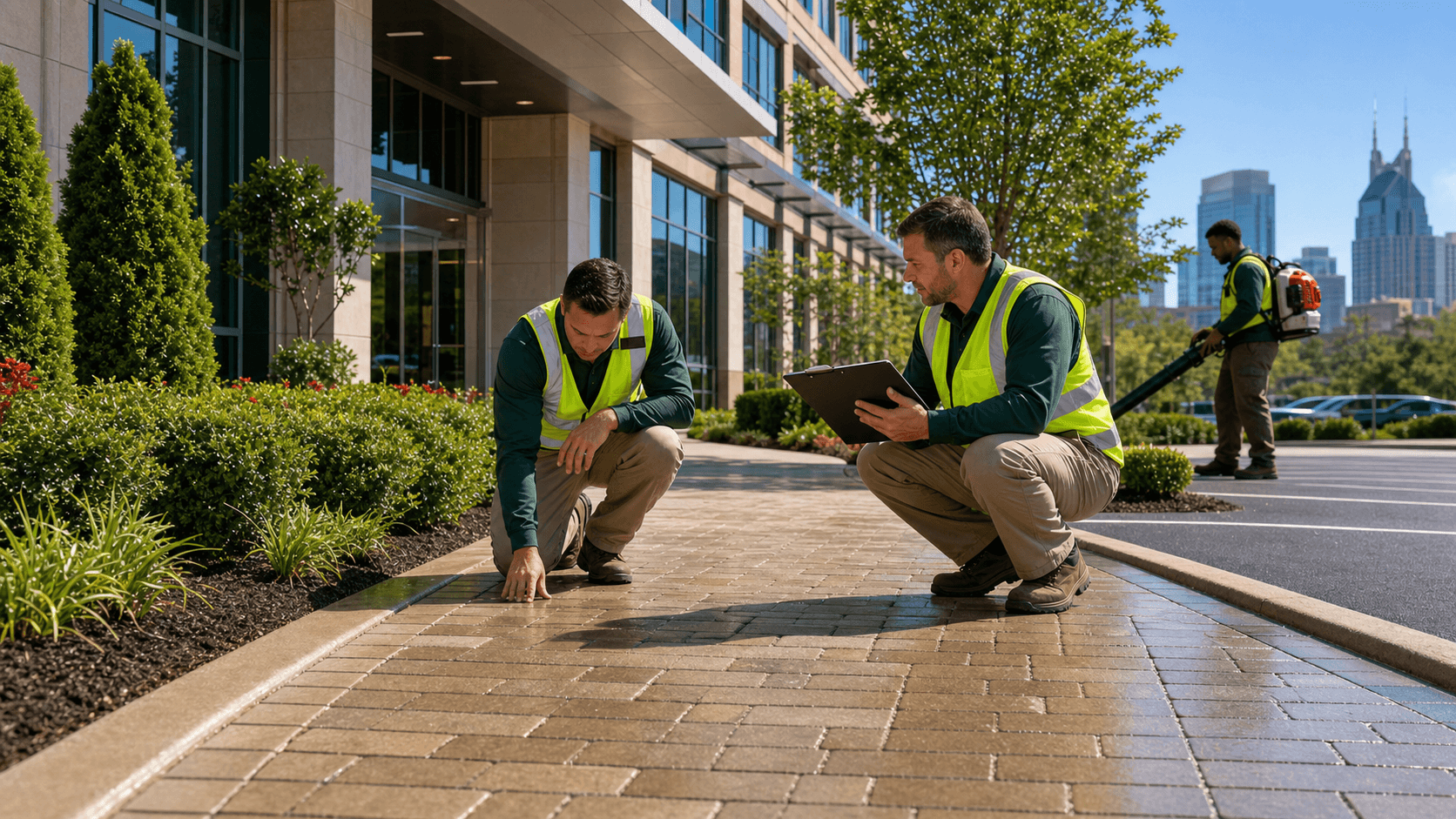
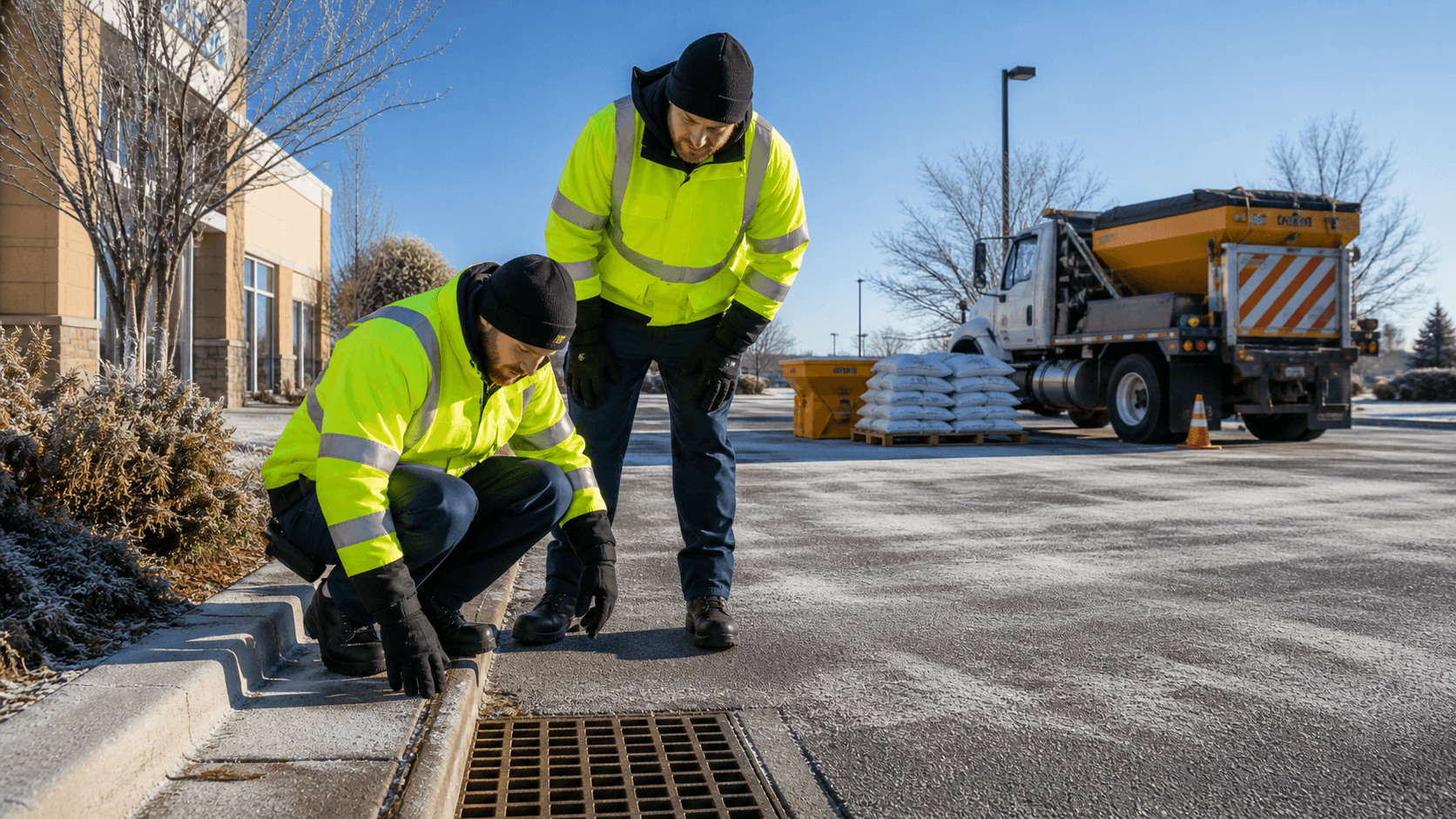
A preseason property walk is one of the best ways to spot trouble before ice has a chance to form. We look for places where water gathers after rain, since those spots can turn into hidden hazards once temperatures drop below freezing. Low areas, curb lines, gutter outlets, blocked drains, and pavement depressions all deserve attention.
Your busiest areas should receive the most careful review. It helps to note where people walk, where vehicles stop, and where deliveries move through the property. Priority areas may include:
- Main entrances and employee entrances
- Accessible parking spaces, ramps, and pedestrian crossings
- Loading docks, delivery zones, and pickup lanes
- Dumpster areas and service paths
- Steep drives or areas with frequent vehicle traffic
Pavement problems can also make ice control harder. Potholes can hold water, loose wheel stops can interfere with service, and uneven sidewalks can create trip hazards even without ice. We also recommend checking faded striping and drains blocked by leaves or debris. Addressing these concerns before winter helps treatment crews apply materials where they are needed most.
Clear, Repair, and Mark Surfaces Before Winter
Parking lots collect more than vehicles throughout the year. Leaves, gravel, litter, mulch, and other debris can gather near curbs and drains. Once rain arrives, organic material can hold moisture, block drainage points, and leave slick patches behind after a cold night.
Fall is also a good time to complete repairs that may be harder to manage during colder weather. Filling potholes, sealing cracks, repairing broken curbs, and correcting uneven concrete can reduce places where water settles. Freeze-thaw cycles can make small pavement issues worse, so taking care of them early supports safer surfaces throughout the season.
Clear markings matter when rain, frost, or winter weather reduces visibility. Parking lines, accessible spaces, fire lanes, loading zones, pedestrian crossings, and directional arrows should be easy to see. A clean, well-marked property allows ice treatment in Smyrna, Tennessee to be applied more accurately, especially near curbs, entrances, traffic lanes, and pedestrian access points.
Set an Ice Response Plan Before Storms Hit
Ice management works best when everyone knows what should happen before conditions become hazardous. We work with commercial property managers to identify service priorities, so crews can focus on the areas that need attention first rather than waiting for instructions during changing weather.
For many properties, the first-treatment list includes:
- Emergency access routes and fire lanes
- Primary entrances and high-traffic sidewalks
- Accessible parking and ramps
- Steep drives and heavily used traffic lanes
- Delivery areas, loading zones, and employee access points
Timing is another part of the plan. Pretreatment before freezing rain or light snow can help reduce ice bonding to pavement and concrete. Follow-up service may still be needed after weather passes through, especially when melting snow or rain refreezes overnight. Site conditions, shade, traffic, and changing temperatures can all affect how surfaces respond.
Communication should be clear before a storm is on the way. Choose one property contact, establish approval procedures, and make sure tenants, employees, and vendors know how to report a hazardous area. A documented plan for ice treatment in Smyrna, Tennessee helps businesses respond faster when winter weather arrives unexpectedly. It also gives our crews the information they need to prioritize the right areas without unnecessary delays.
Coordinate Teams, Tenants, and Site Access
Even a well-built plan can slow down if a crew cannot enter the property or reach the surfaces that need treatment. Before winter arrives, we recommend confirming gate codes, after-hours contacts, security procedures, restricted areas, and delivery schedules. Those details help us enter the site safely and avoid interrupting your operations.
Tenants and employees should understand seasonal expectations, too. Encourage them to use designated entrances, report icy conditions promptly, and avoid parking in areas set aside for service equipment. Vehicles left overnight, shopping carts, temporary signs, outdoor dining items, parked trailers, and landscaping features can all affect where equipment can move.
Strong coordination supports more consistent ice treatment in Smyrna, Tennessee, particularly at multi-tenant offices, retail centers, industrial sites, healthcare facilities, and properties with around-the-clock operations. When obstacles are removed or clearly identified, crews can treat surfaces more thoroughly and keep attention on the places people use most.
Schedule Your Preseason Site Walk Today
A preseason parking lot assessment gives you time to address drainage concerns, surface damage, access issues, and priority treatment areas before freezing conditions become a daily concern. Early planning can support safer access, reduce liability exposure, protect pavement, and help your operation stay on track when weather changes.
The most useful winter plan is one built around your actual property, not a generic checklist. Reviewing the site before the first freeze helps ensure that entrances, walkways, parking areas, and service routes are ready for a faster, more organized response when ice arrives.
Keep Your Parking Lot Ready for Winter Conditions
Pugh's EarthWorks provides dependable ice treatment in Smyrna, Tennessee to help businesses maintain safer, more accessible parking areas. Our team can tailor service around your property's traffic patterns, priority areas, and operating schedule. Contact us to discuss a winter service plan for your business.